Permitting Bill Tests Democrats’ Commitment to Energy Affordability
Energy leaders argue a bipartisan permitting bill will expose Democrats’ stance on lowering energy costs and reducing grid burdens.
2 min read
WASHINGTON — A bipartisan permitting bill is set to test Democrats’ commitment to lowering energy costs and reducing the financial burden on ratepayers, according to energy industry leaders. The bill, known as the Bipartisan American Affordability and Jobs Act, is expected to face a critical vote in the Senate, with experts warning that the outcome could shape the U.S. energy landscape for years to come.
Slow Approvals Hinder Energy Projects
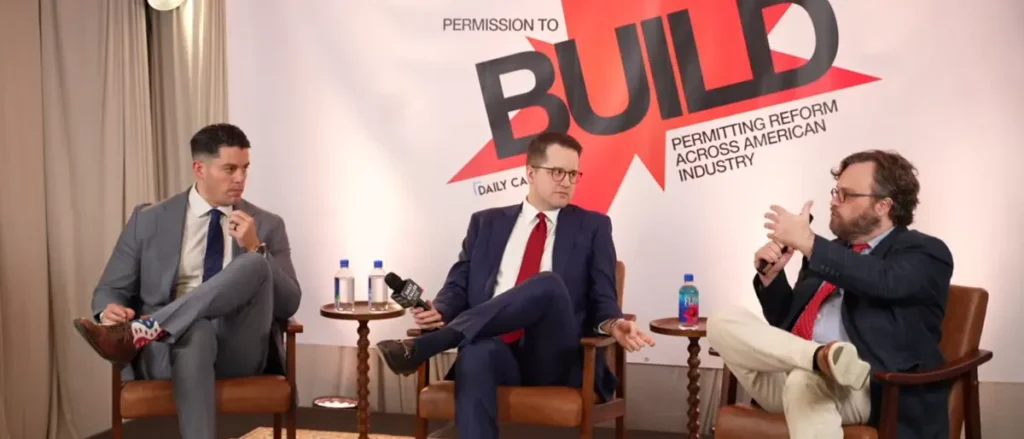
Energy and policy experts have argued that the slow pace of federal approvals is holding back the construction of power plants, pipelines, and other critical infrastructure needed to power the country’s industrial future. During a Tuesday Daily Caller Live event in Washington, D.C., Christopher Johnson, president of the American Energy Leadership Institute, and Conner Brace of Boundary Stone Partners highlighted the urgency of passing the bill to address these delays.
Johnson noted that environmental groups are opposing the bill because they aim to halt growth at all costs, often through legal challenges against projects like pipelines and solar panels. He argued that the bill represents a real test for Democrats to support measures that lower energy costs, which they previously campaigned on.
Data Centers and Grid Upgrades
Brace acknowledged that Democrats have the first opportunity to pass a federal law governing data centers, which could ensure that ratepayers are not burdened with the costs of grid upgrades. He criticized the party for potentially voting against the bill despite their campaign promises.
The bill requires large data centers to cover the cost of grid upgrades themselves, rather than passing the expenses onto consumers. Brace praised the bill as a good start and noted that the process of passing such legislation is building bipartisan momentum.
Political and Economic Implications
With the House in Dec. 2025 having passed the SPEED Act, which aims to accelerate the federal environmental review process for energy initiatives, the current lame-duck session may be the last opportunity for Republicans to push for permitting reform. Johnson emphasized the importance of building large-scale projects to power artificial intelligence and advanced manufacturing, which he believes can inspire younger generations and rebuild hope in the country.
He warned that young people are watching China build entire cities in a decade, while the U.S. struggles to complete even a single housing project in the same time frame. Johnson argued that whichever party or coalition seizes on this opportunity will be the one to rebuild hope in the country.
Source: Daily Caller