Ilhan Omar’s Congressional Tenure Faces Uncertainty Amid DOJ Citizenship Probe
Ilhan Omar’s re-election victory may not secure her seat as DOJ investigates her citizenship eligibility and potential legal consequences.
4 min read
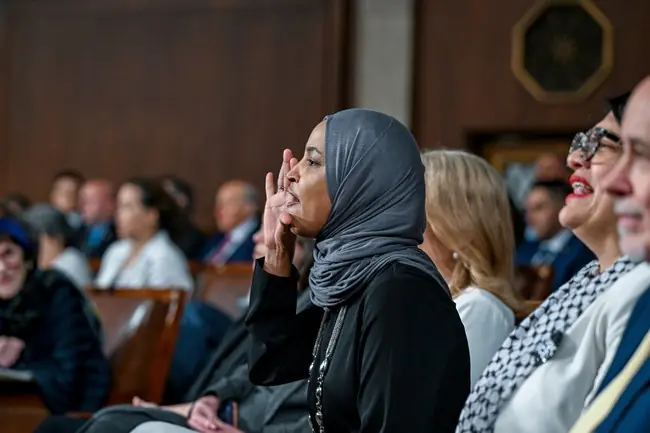
Rep. Ilhan Omar (D-Minn.) secured her re-election in November, but her victory may not be the final chapter in her political career. Despite her win, the Department of Justice (DOJ) is intensifying its investigation into her citizenship status, raising serious questions about her legal eligibility to hold office. Omar’s re-election speech, which was filled with defiance toward the Trump administration, may have been premature, as the legal battle over her citizenship could ultimately determine her future in Congress.
Legal Challenges Loom Over Omar’s Tenure
Omar, who was born in Somalia and fled the civil war with her family, arrived in the U.S. in 1995 at age 12. She claimed U.S. citizenship through her father’s naturalization in 2000, but recent developments have cast doubt on her eligibility. In May 2019, her staff requested that her birth year be changed from 1981 to 1982 in official records, prompting scrutiny over whether she was under 18 at the time of her father’s naturalization.
If she was under 18, she would have been eligible to derive U.S. citizenship from her father. However, if she was not, she would not have been eligible. Rep. Tom Emmer (R-Minn.) has argued that Omar’s citizenship status is a critical legal issue. During an interview with Newsmax, Emmer stated, “I think Ilhan Omar, she’s a dishonest, anti-American individual who has lied about her age for years.” He further claimed, “She lied because you get naturalized as a citizen with your natural parent when they are naturalized, if you are under the age of 18. Well, she was not under the age of 18.”
Emmer suggested that the DOJ’s investigation into Omar’s citizenship could lead to a legal determination that she is no longer a U.S. citizen. “Once it’s established that she was over the age of 18 when she claimed to be a minor, she’s no longer a citizen of the United States. And when she’s no longer a citizen, she’s not entitled to serve in Congress,” he added. This argument is not just about Omar’s past actions, but about the legal implications of her citizenship status on her current position in Congress.
Broader Immigration Fraud Probe
The DOJ’s investigation extends beyond Omar’s citizenship status. It includes an examination of her 2009 marriage to Ahmed Elmi, a British citizen, and whether that marriage was part of an immigration fraud scheme. Investigators are also looking into whether Elmi is actually her brother and whether Omar lied on federal forms to gain citizenship. Her House financial disclosures are also under scrutiny, highlighting the depth of the probe.
Homeland Security Investigations (HSI) agents conducted a search of Omar’s Washington, D.C., home on October 12, seizing boxes of material. The New York Post reported that her certified 2009 Hennepin County marriage license shows her surname was struck out, replaced with “Elmi,” and then switched back to “Omar.” This inconsistency in her records has raised further questions about the validity of her immigration history.
Political Implications and Potential Consequences
While Omar’s re-election was seen as a safe win, the political ramifications of the DOJ’s actions could be significant. Rep. Tom Emmer has suggested that if the DOJ confirms her citizenship status is invalid, the House could move to remove her from office. “I don’t think we’re going to need to [hold a vote to exclude her],” Emmer said on Newsmax. “I think Ilhan Omar, she’s a dishonest, anti-American individual who has lied about her age for years.”
Emmer’s comments reflect a broader political strategy to challenge Omar’s eligibility. He argued that the citizenship question offers a cleaner route than any criminal case. “She would have to reapply to be a citizen — it’s an administrative procedure. She shouldn’t be in Congress,” he told Finnerty. This approach highlights the potential for legislative action if the DOJ’s findings confirm her ineligibility.
Broader Context and Legal Precedents
The DOJ’s investigation into Omar is part of a larger effort to address immigration fraud and ensure that public officials meet the legal requirements for their positions. The case has drawn comparisons to past controversies involving the citizenship status of other public figures, though the specific legal and political implications of Omar’s case remain unique.
As the DOJ continues its investigation, the outcome could set a precedent for how citizenship is verified for elected officials. The case also underscores the importance of transparency and accountability in the political process, particularly when public officials are involved in matters of national security and immigration.
What’s Next?
As of now, the DOJ is finalizing its investigation into Omar’s citizenship status. Rep. Tom Emmer has stated that the agency is looking into multiple aspects of the case, with the citizenship question being one of them. The broader immigration fraud probe remains ongoing, with investigators examining various aspects of Omar’s past, including her marriage and financial disclosures.
If the DOJ confirms that Omar is no longer a U.S. citizen, the implications for her current position in Congress could be severe. While the House may not need to hold a vote to remove her, the legal and political consequences could be significant. The case highlights the intersection of immigration law, political accountability, and the legal requirements for holding public office.
Source: PJ Media