SpaceX Aims for Historic Rocket Recovery in Starship Flight 15
SpaceX prepares to attempt the first full recovery of an orbital rocket with Starship Flight 15, set for Friday.
2 min read
SpaceX is preparing for a historic first with the launch and retrieval of the largest and most powerful rocket ever built. Starship Flight 15 is set to take off on Friday from Starbase in South Texas in a monumental attempt to catch both stages of the rocket on its return to Earth.
A Bold Attempt at Full Recovery
What makes this particular launch so significant is the attempt to retrieve both parts of the rocket: the Super Heavy first-stage booster and upper-stage Starship, also known as “Ship,” which will be caught in back-to-back landings using the launch tower’s “chopstick” arms.
The 15th flight for the megarocket, which also plans to deliver 26 new Starlink V3 satellites into orbit, will be granted a 75-minute launch window opening at 5:45 p.m. ET. The Federal Aviation Administration signed off on the launch in a late-afternoon approval on Friday.
The Super Heavy booster will push the Ship through the densest parts of the atmosphere, and then make its way to the launchpad. Meanwhile, the Ship will continue to an altitude of roughly 170 miles, deploy the Starlink satellites, and circle the planet 14 times over the course of 22 hours before returning for its own catch. The booster will be removed before the Ship returns to the launchpad.
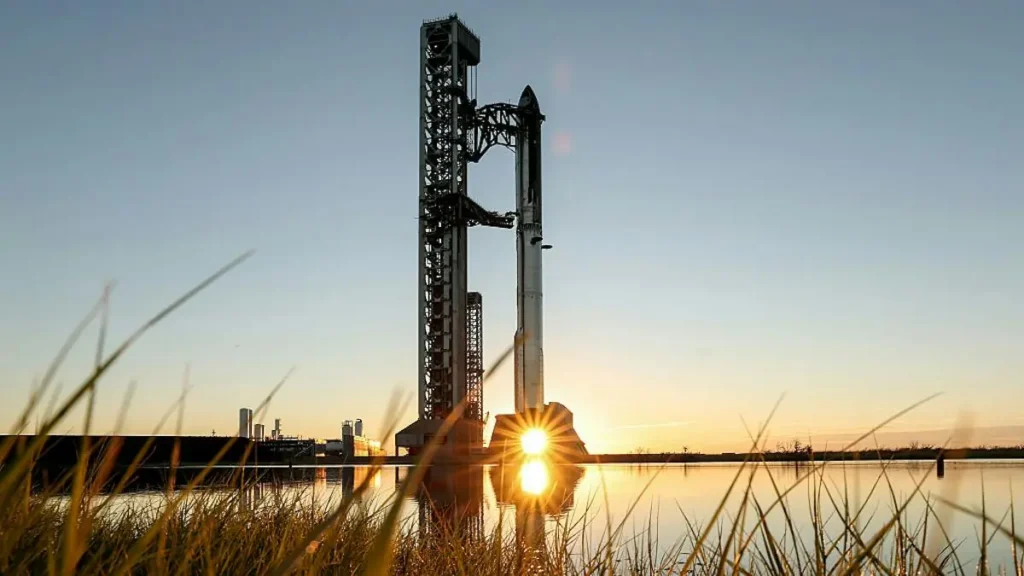
Starship 42 preparing for launch
A Step Toward Reusable Rockets
Most rockets are incredibly expensive and often discarded after a single use — but a successful launch would serve as a pivotal step for SpaceX in its aim to create the first fully reusable rocket.
“If successful, this will mark the first full recovery of an orbital launch system and a breakthrough moment in making Starship a reliable, rapidly reusable rocket,” the company’s website reads.
At a conference in September, SpaceX founder Elon Musk said Starship is designed “not just [for] full reusability but also rapid reusability, like an aircraft.” Beyond its long-term goal to use the megarocket for bringing people to Mars, the company plans to use the rocket for other key priorities, including Starlink launches.
But SpaceX is not the only one relying on the technology. NASA is also planning to use a version of Starship for its own launch of Artemis III next year. Any mishap on SpaceX’s side could disrupt NASA’s plan to return to the moon in 2028.
Source: Daily Wire