Farage Calls for Stronger UK Presence on Global Stage
Nigel Farage urges UK to reject ‘managed decline’ and boost national security and global influence.
4 min read
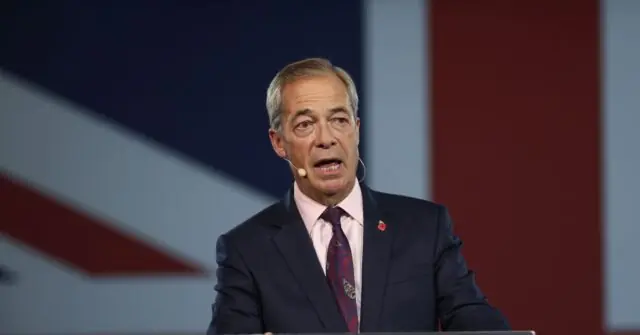
Nigel Farage, leader of Reform UK, has called on the British public to reject the establishment’s ‘managed decline’ approach and embrace a more assertive strategy for national and global security. In a recent article published in The Express, Farage outlined his vision for a stronger, more sovereign United Kingdom, emphasizing the need to secure borders, increase defense spending, and reassert Britain’s global influence.
Rejecting ‘Managed Decline’
Farage criticized the long-term decline of Britain’s global power and warned that the threats facing the nation are no longer abstract. He pointed to the increasing presence of lone-wolf terrorists and state-sponsored actors, many of whom are linked to Iran, entering the UK through porous borders. He argued that these threats have been ignored by a ‘complicit political class’ for years.
Farage emphasized that the UK’s role in the world has diminished over decades, but he insisted that this decline does not have to be permanent. ‘The power we once projected across the globe does not have to give way to the establishment doctrine of managed decline,’ he wrote. He argued that Reform UK has a plan to put Britain back in the driving seat, both at home and abroad.
Border Security and Sovereignty
Farage stated that securing Britain’s borders would be a top priority for a Reform UK government. He argued that ‘being respected starts at home’ and that a strong border is essential for national security. He also proposed leaving the European Court of Human Rights, the International Criminal Court, and the Refugee Convention, in an effort to regain full sovereignty over Britain’s borders and ensure that no international court can override British law.
Additionally, Farage called for the banning of Islamist groups like the Muslim Brotherhood, which he accused of fomenting separatism and undermining Western power structures with the aim of instituting Sharia in the West. He argued that these groups pose a direct threat to national security and must be addressed head-on.
Rebuilding Military Might
Farage stressed that Britain’s national security does not end at the 12-mile line and that re-establishing military might is essential for global influence. He proposed increasing defense spending to three percent of GDP by 2030 and 3.5 percent by 2035, with a focus on critical areas such as the nuclear deterrent, undersea defense, and cyber/space-based threats.
He criticized the current Ministry of Defence procurement processes, which he argued have left the armed forces ‘threadbare.’ Farage emphasized that the goal is not just to increase spending, but to ensure that the money is spent effectively and efficiently to strengthen Britain’s military capabilities.
Peace and Prosperity
Despite his focus on military strength, Farage also emphasized the importance of being a force for peace on the global stage. He argued that peace is essential for lowering energy prices and ensuring that traded commodities are more affordable for Britons. He noted that investing in defense is not just about having a strong military, but also about strengthening the resilience of critical infrastructure at home.
Farage warned that Vladimir Putin sees Britain’s vulnerabilities and exploits them, and that the UK must take steps to protect its airports, hospitals, energy systems, and food security. He argued that investing in these areas is crucial to ensuring that any and all attempts to attack the UK will fail.
Global Sovereignty and Strategic Priorities
Farage outlined several key national security priorities, including reasserting Britain’s sovereignty over the Falklands, the Chagos Islands, and Gibraltar, and rejecting demands from former colonies for reparations. He also emphasized the importance of countering Communist China’s desire to conquer Taiwan, given the UK’s reliance on the Taiwan Semiconductor Manufacturing Company (TSMC), which accounts for around 70 percent of the global semiconductor market.
Farage concluded by stating that to bring peace abroad, Britain must first build strength at home. He argued that Britain cannot simply declare itself a world power; it must create one through hard-headed, pro-British policies that show the world, and above all its enemies, that it means business. He called for a commitment to upholding sovereignty, protecting people at home and abroad, and securing the conditions for prosperity by actively promoting British business and inward investment.
Farage concluded: ‘Reform UK rejects the idea that we must be a nation in decline. We can be a nation on the rise once again. Not just for our own benefit, but because of something I know most Britons agree on: the world is a better place when Britain is a better place, a safer place when Britain is safer, and a more peaceful place when Britain is at its best.’
Source: Breitbart