Burma Junta Exploits Recruitment Quotas to Abduct and Sell Young Men
Burma’s military is using forced recruitment to abduct and sell young men, sparking human trafficking concerns.
3 min read
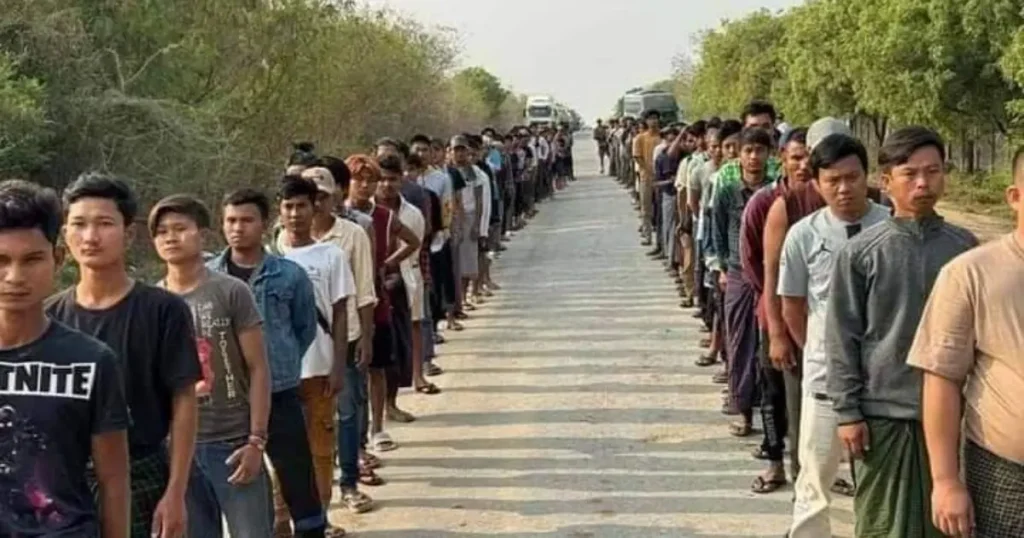
In a troubling development, reports indicate that Burmese authorities are abducting young men and selling them to the military to meet recruitment quotas. These abductions are allegedly orchestrated by local administrators, police, and militias, with the military using strict quotas to fulfill its needs. The situation has drawn international attention, with allegations of modern human trafficking and forced labor emerging from multiple sources.
Abductions and Recruitment Quotas
Phyo Wai, a man from Myanmar, left home after an argument with his wife. His wife, Ma Moe San Pan, sought help from her cousin, who worked at the local ward administration office. She claimed the cousin took him to the ward office, which then sold him to another ward for 4 million kyats (about $820) to fill its military recruitment quota. The administrator of the receiving ward admitted sending Phyo Wai to military recruiters but denied any financial exchange. Despite the police accepting Ma Moe San Pan’s complaint, they refused to classify the case as human trafficking.
Across the country, local administrators, brokers, police, and militias are seizing young men and selling them to the army. This trade is driven by the People’s Military Service Law, which was activated in February 2024. Under this law, the military assigns quotas to villages, wards, and townships based on their populations. Leaked documents show that authorities were ordered to enforce these quotas aggressively. In May, Defense Minister Gen. Tun Aung instructed regional administrations to work with immigration officials to compile conscription lists.
Escalating Concerns and Forced Labor
The Institute for Strategy and Policy–Myanmar (ISP-Myanmar) estimates that the army has taken in more than 136,300 recruits across 29 training batches. Annual intake rose from an average of 7,200 before the law took effect to over 56,400. Radio Free Asia interviewed more than 30 families who said relatives had been trafficked into the military. Their accounts describe networks that include police, immigration officers, local administrators, soldiers, former soldiers, and criminals with ties to officials.
Maj. Naung Yoe of the Myanmar Defense and Security Institute, a research group founded by military defectors, described the situation as ‘modern human trafficking, a modern slave market.’ In May, a monk from Ma Ba Tha, the Buddhist nationalist Association for the Protection of Race and Religion, posted a video accusing Ward 50 administrator U Hla Sein of selling a man to the military for 8 million kyats (about $1,630). In late August, Yangon police detained a fire service employee and his son-in-law on suspicion of abducting four young men to sell for conscription.
In a separate forced-labor case in Mawlamyine, the capital of Mon State, three men beat and abducted police officer Zaw Win Tun at a pagoda in June and sold him into the fishing industry. One of the men claimed to be an army major. The three are being prosecuted for trafficking, and one carried an identity card identifying him as a recruitment assistant at the Mawlamyine Military Recruitment Unit Office.
Families Pay Ransom for Sons
Some families pay to get their sons back. On Oct. 26, abductors seized a young man in Mawlamyine’s Thiri Myaing ward, and his family paid 10.5 million kyats (about $2,140) for his release. In Sinbaungwe Township, Magway Region, a family paid 20 million kyats to free their son (about $4,080). In Bago Region, lawmaker Kyaw Swar Linn said families of men arrested in Pyay were told to pay up to 5 million kyats (about $1,020) for their release.
The regime acknowledges the raids and says they target people avoiding the draft. In July, Deputy Home Affairs Minister Maj. Gen. Min Thu told parliament that authorities were ‘compelled’ to raid homes and seize young men at checkpoints because many were fleeing to avoid conscription. He later promised effective action against conduct that violated the law or its bylaws.
Source: The Gateway Pundit