Gut Bacteria Influence Brain Health Through Chemical Signals
Discover how gut bacteria produce chemicals that impact brain function and overall health.
3 min read
In the early 1900s, Nobel Prize-winning immunologist Élie Metchnikoff became fascinated by the longevity of Bulgarian villagers who regularly consumed fermented milk. He suspected that intestinal bacteria influenced aging and believed that introducing beneficial microbes could counteract harmful ones. His insights were remarkably ahead of his time, as today we know that gut bacteria play a crucial role in influencing health through chemical signals.
The Gut-Brain Connection
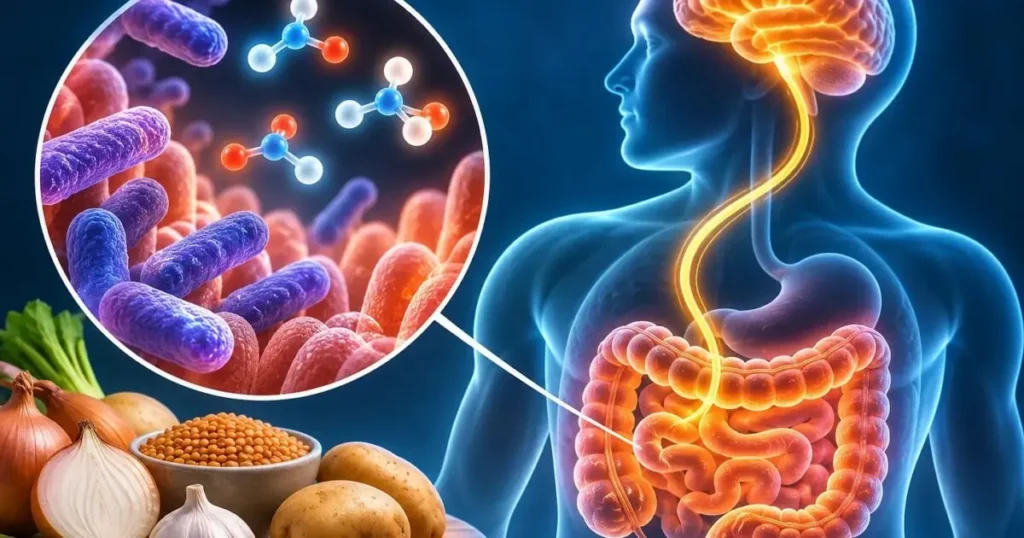
One important way bacteria communicate with the body is through the chemicals they manufacture from our food. When you eat an onion, a bowl of lentils, or even a potato that’s been cooked and cooled, something remarkable happens hours later. Bacteria in your colon turn parts of that food into chemicals that help protect your intestinal lining, regulate inflammation, and even influence the barrier protecting your brain.
Your body can’t turn fiber into these chemicals on its own. It relies on gut bacteria to produce three remarkable molecules: acetate, propionate, and butyrate. Known collectively as short-chain fatty acids, they show how the food you eat influences your health in ways you might never expect.
The Microbial Assembly Line
Your small intestine digests most carbohydrates. But certain fibers and resistant starches escape digestion and reach your colon, where bacteria ferment them. This process produces three important organic acids: acetic acid, propionic acid, and butyric acid. Scientists collectively refer to them as short-chain fatty acids, typically produced in approximate proportions of 60%, 20%, and 20%.
What’s fascinating is that producing these molecules often requires teamwork. Some bacteria break fiber into smaller sugars. Others ferment those sugars into substances such as acetate and lactate, which certain bacteria can then use to produce butyrate. Scientists call this microbial cross-feeding. Think of an assembly line: One group of bacteria supplies the raw materials another needs to manufacture the finished product.
Protecting the Intestinal and Brain Barriers
Your intestines must absorb nutrients while preventing bacteria and potentially harmful substances from entering your bloodstream. To accomplish this, intestinal cells are connected by microscopic seals called tight junctions. When these seals weaken, bacterial products can pass more easily between cells and encounter immune cells, potentially contributing to inflammation.
Butyrate helps maintain this barrier in several ways. It’s a major fuel source for the cells lining your colon, called colonocytes. As these cells burn butyrate, they consume oxygen, helping preserve the low-oxygen environment beneficial intestinal bacteria need. Butyrate also helps regulate the proteins holding intestinal cells together. It activates an enzyme called adenosine monophosphate kinase (AMPK), which helps cells manage energy and assemble tight junctions. It also inhibits histone deacetylases (HDACs), enzymes that influence which genes are switched on or off.
The Role of Gut Bacteria in Immune Regulation
Butyrate doesn’t merely feed your intestinal lining. It can influence the instructions those cells follow. A healthy immune system attacks invaders aggressively, but also knows when to stop. Otherwise, it may attack your own cells and tissues. Regulatory T cells, specialized immune cells that restrain excessive inflammation, depend on a protein called forkhead box P3 (Foxp3), also known as scurfin. By inhibiting HDAC enzymes, butyrate can make the Foxp3 gene more accessible, encouraging cells to produce this protein.
Scientific Evidence of the Gut-Brain Axis
Your gut bacteria can influence the chemical signals that help your immune system decide when to fight and when to stand down. Your brain has its own security system: the blood-brain barrier, formed by tightly connected blood-vessel cells that restrict which substances enter brain tissue. In a fascinating 2014 experiment, researchers studied mice raised without gut bacteria. These mice had unusually permeable blood-brain barriers and reduced levels of proteins responsible for sealing their brain blood vessels. When researchers introduced normal gut bacteria, the barrier improved. Giving the mice butyrate also helped restore protection.
These findings don’t prove that fiber prevents dementia or treats neurological disease in humans. But they reveal a biological connection between the gut and the brain, which we call the gut-brain axis.
Source: The Gateway Pundit