Senate Rejects Iran War Powers Resolution
Senate votes down resolution to end U.S. hostilities with Iran, with three Republicans joining Democrats.
2 min read
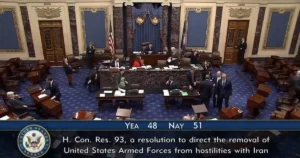
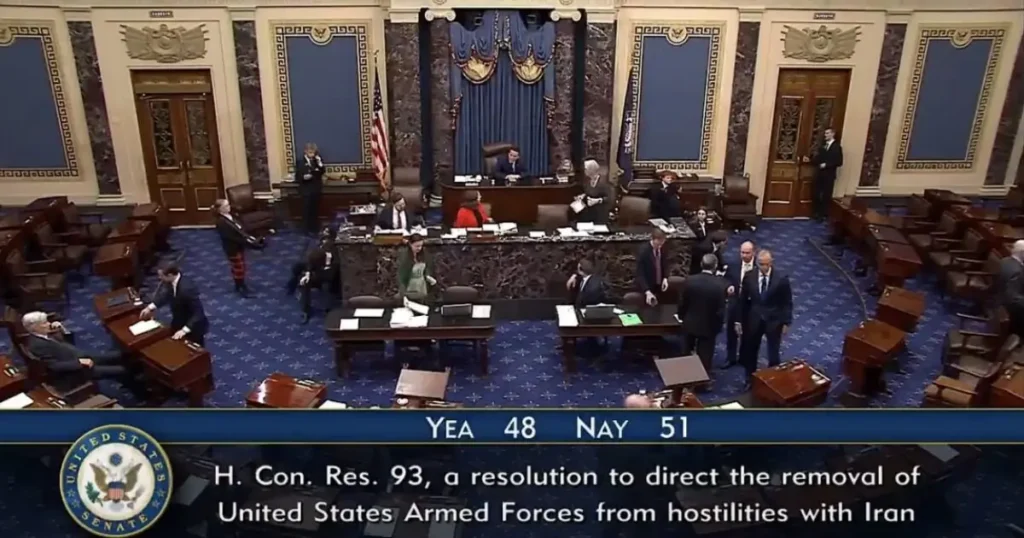
The U.S. Senate on Thursday rejected a war powers resolution aimed at directing former President Donald Trump to end hostilities with Iran, with the vote resulting in a 48-51 defeat. The resolution, which would have been largely symbolic, sought to compel Trump to withdraw U.S. armed forces from conflict with Iran. Despite the bipartisan support from three Republican senators—Susan Collins, Lisa Murkowski, and Rand Paul—the measure failed to pass, marking another setback for efforts to end the war.
Key Vote Dynamics
The resolution, which did not require presidential approval, was intended to signal Congress’s stance on ending the conflict. However, the vote was primarily symbolic, as the measure would not have imposed legal obligations on the administration. Democrat Senator John Fetterman was the only member of his party to vote against the resolution, while Republican Senator Thom Tillis, who had previously supported a similar measure, chose to oppose the current version.
Context and Political Implications
This vote comes amid ongoing tensions between the U.S. and Iran, with hostilities escalating since late February. Since the conflict began, more than a dozen war powers resolutions have failed in Congress, reflecting a divided political landscape. Democrats, buoyed by recent midterm election results, hoped to use the vote to put pressure on Republicans to support ending the war, even though the resolution would not have required Trump’s signature to take effect.
Senators’ Statements and Motivations
Senator Tillis explained his position by stating that the resolution was a statement from Congress and that he had already made his stance known. He emphasized that supporting the resolution was not necessary to convey his position. Meanwhile, the majority of Democrats and three Republicans who supported the measure saw it as an opportunity to signal opposition to continued hostilities, even if the resolution lacked enforceable consequences.
Broader Implications for U.S. Foreign Policy
The failure of the resolution underscores the challenges of achieving consensus on foreign policy in a polarized Congress. While the measure was not binding, it highlighted the growing frustration among lawmakers with the ongoing conflict and the lack of progress in de-escalating tensions. As the situation continues to evolve, the role of Congress in shaping U.S. foreign policy remains a contentious issue.
Source: The Gateway Pundit