Historical Echoes: When Protecting Children Becomes a Risk
A troubling case in Massachusetts raises questions about consent, state authority, and the protection of minors.
2 min read
In American history, some of the most disturbing abuses were committed by individuals who claimed they were helping. These were not just criminals, but people with advanced degrees, working for prestigious institutions and government agencies, who justified their actions through science and the greater good. One such case was the Fernald Science Club, where boys at Massachusetts’ Walter E. Fernald State School were fed radioactive substances under the guise of medical research. MIT scientists and Quaker Oats funded the experiments, while the government supported the research. Though the children were vulnerable, their parents were not adequately informed, and the adults in charge participated.
A Modern Paradox
Decades later, the truth emerged, revealing serious violations of informed consent, although no significant physical injuries were found. In 1997, MIT and Quaker Oats agreed to a $1.85 million settlement. But what if these patterns are not just of the past?
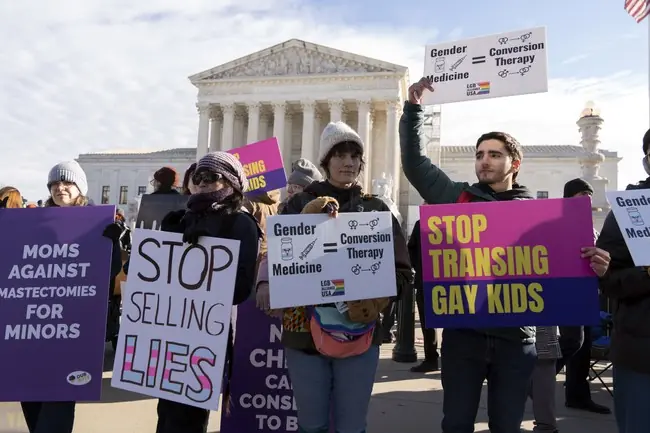
Today, in the same state, the Kutzko family is facing a battle that raises profound questions about government authority, medical decision-making, and the protection of children. Joseph and Arlene Kutzko claim they had no idea their teenage daughter wanted to transition to living as a boy. They believed she was staying after school for academic assistance, not meeting with school personnel about her gender identity. They weren’t given the opportunity to discuss her experience, seek independent advice, or make decisions together as a family.
Massachusetts’ Department of Children and Families intervened, leading to a disputed case involving allegations of physical abuse. The DCF did not substantiate the abuse, but supported a finding of neglect. The parents argue that the neglect determination stemmed from their alleged failure to affirm a transition they knew nothing about. Publicly reported court records also describe allegations of assault and witness intimidation, which the parents dispute. The full juvenile-court record is not public.
These competing accounts deserve examination, not automatic acceptance. The Kutzkos say their daughter was placed in a boys’ residential facility and given birth-control medication without their permission. Their attorney has made similar allegations. The state also sought to authorize testosterone treatment, which a judge temporarily blocked. The family has been separated for nearly two years.
These circumstances raise difficult questions: Who determines the necessity of medical intervention? What constitutes meaningful consent from a minor? When may the state override parental objections? And what safeguards protect a child when the state controls custody and treatment access?
Medical interventions can have lifelong consequences. Testosterone can cause irreversible physical changes, and some gender-related surgeries permanently remove healthy tissue. Evidence on long-term benefits and risks remains contested, and medical authorities differ in their recommendations.
Recognizing these uncertainties does not mean every treatment is an experiment or that every transgender teenager is being coerced. It means medical decisions involving minors deserve exceptional care, transparency, and scrutiny. The historical parallels extend beyond medicine, as seen in cases like Fernald, Willowbrook, and the Tuskegee syphilis experiments, where respected institutions violated human rights under the guise of scientific or public-health purposes.
Source: PJ Media