Trump Proposes New Tariffs Amid Legal Challenges
White House targets 14 countries with new tariffs under Section 301, following Supreme Court’s rejection of IEEPA.
2 min read
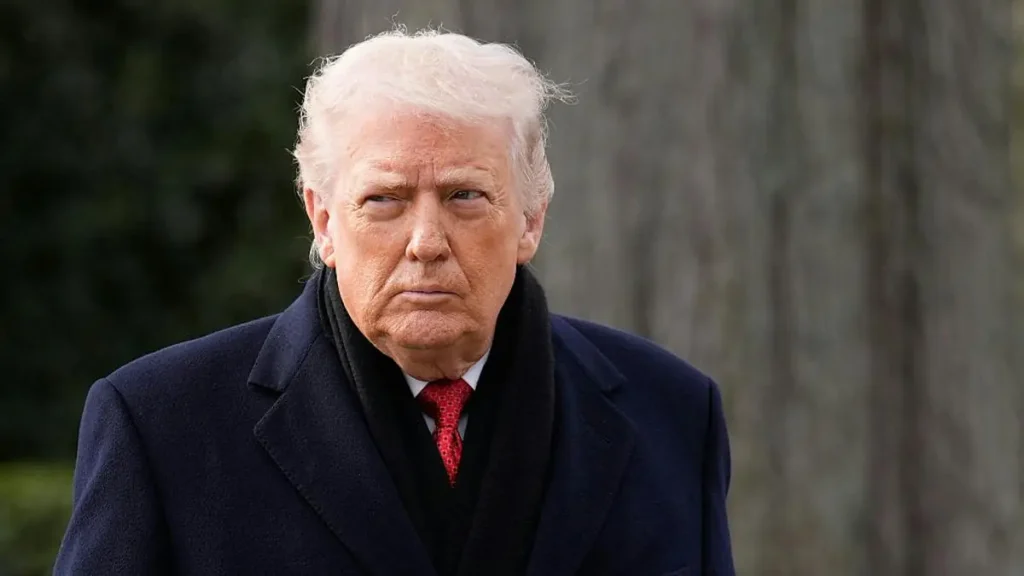
President Donald Trump’s administration has proposed a new round of tariffs targeting imports from 14 major trading partners, including China, Japan, and the European Union, as it seeks to rebuild its trade policy after a recent legal setback. The move follows the Supreme Court’s February ruling that invalidated the administration’s previous use of the International Emergency Economic Powers Act (IEEPA) to impose tariffs.
New Tariff Strategy Under Section 301
This time, the administration is relying on Section 301 of the Trade Act of 1974, which allows the U.S. to impose tariffs in response to foreign government practices deemed unreasonable or discriminatory. U.S. Trade Representative Jamieson Greer announced that manufacturing policies in 14 economies were actionable under the law, including China, the European Union, Japan, India, South Korea, Vietnam, Thailand, Indonesia, Malaysia, Singapore, Switzerland, Bangladesh, and Cambodia.
The administration argues that foreign governments have supported domestic manufacturing through subsidies, state-owned enterprises, and other policies that distort markets and weaken American industries. Greer emphasized that these practices have driven down prices, harmed U.S. manufacturing jobs, and undermined American competitiveness.
Tariff Rates and Exemptions
China faces proposed tariffs of up to 20%, while Vietnam could face duties as high as 35%. India may face up to 25% in the absence of a trade agreement. The European Union, Japan, South Korea, Switzerland, and Taiwan could see tariffs of up to 15%, and several Southeast Asian countries could face up to 18%. Certain products, including energy, critical minerals, fertilizers, and some semiconductors and pharmaceuticals, would be exempt.
The proposed tariffs are not yet in effect. The administration must collect public comments and hold hearings before finalizing the duties. A public hearing is scheduled to begin January 25, 2027, with no effective date announced.
Political and Trade Context
The announcement comes as trade negotiations continue with Beijing and other major partners. China rejected the U.S. allegations of industrial overcapacity, with its Foreign Ministry calling the issue a false pretext for political manipulation. The move also follows Democrats winning control of both chambers of Congress in the November midterms, with Senator Ron Wyden criticizing the administration’s approach as an attempt to reconstruct the tariffs invalidated by the Supreme Court.
Wyden argued that while global overcapacity is a serious issue, unilateral tariffs are not the solution. The administration’s approach reflects ongoing tensions in U.S. trade policy, balancing legal constraints and economic strategy in a rapidly evolving global landscape.
Source: Daily Wire