Thanksgiving’s Origins: A Call to Unity Amid Division
A look at the history of Thanksgiving and its role in uniting a divided nation.
4 min read
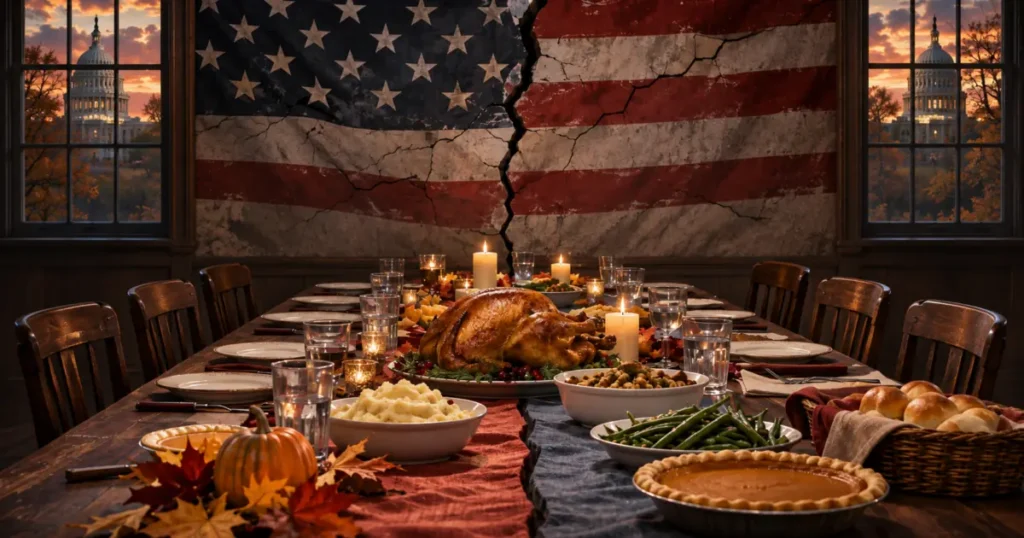
As the nation grapples with deep political and ideological divides, many conservatives are still reeling from the recent midterm losses. The defeat has left many in the conservative movement questioning the future of their values and the direction of the country. Yet, amid the political turmoil, there remains an opportunity to reflect on the origins of thanksgiving-focus-on-gratitude-to-god-and-jesus/”>Thanksgiving—a national holiday born from a time of immense division and the hope for unity.
A Nation Divided in 1863
On September 28, 1863, Sarah Josepha Hale, editor of Godey’s Lady’s Book, the most widely read magazine of its day, penned a personal letter to President Abraham Lincoln. Her letter marked the culmination of over three decades of effort to establish a national day of Thanksgiving. At the time, the United States was embroiled in the American Civil War, a conflict that had claimed over 100,000 lives and pitted brothers against brothers. The war had left the nation in a state of deep division, with moral and political differences felt at every level of society.
Hale, who was 74 years old at the time, had lived through the most bitter and bloodiest chapter in American history. The war had created a sense of despair and hopelessness, yet she remained resolute in her belief that the nation could find a way to heal through gratitude and faith. Her efforts were not just personal; they were a call to action for a country in need of unity.
The Mission of Sarah Josepha Hale
Hale’s mission was clear: to establish a national day of Thanksgiving. For years, she had lobbied numerous governors, presidents, and other state and federal officials to bring about this change. Her vision was rooted in the belief that a national feeling of gratitude could have incalculable benefits for the country. In her own words, she wrote, “A national feeling of Thanksgiving, putting the bounty, goodness, and love of the Creator before the eyes of the dullest and the hearts of the coldest, would effect incalculable benefits to our Country.”
Her efforts were not without challenge. The war had left the nation in a state of uncertainty, with the future of the Union hanging in the balance. Yet, Hale’s determination did not waver. Just 87 days after the end of the Battle of Gettysburg—the bloodiest battle of the Civil War—she sent her letter to President Lincoln. By this point, the war had been raging for more than two years, and Lincoln was fighting to save a nation on fire.
The Proclamation of Thanksgiving
Lincoln’s response to Hale’s letter was swift and profound. Five days later, he issued “A Proclamation for a Day of Thanksgiving, Praise, and Prayer,” establishing the last Thursday in November as a day of Thanksgiving and Praise to our beneficent Father who dwelleth in the Heavens. The proclamation was a call to reflect on the nation’s blessings and to seek divine intervention for healing and unity.
In the proclamation, Lincoln urged the nation to “offer up the ascriptions justly due to Him for such singular deliverances and blessings” and to “commend to His tender care all those who have become widows, orphans, mourners, or sufferers in the lamentable civil strife in which we are unavoidably engaged.” He also implored the Almighty to “heal the wounds of the nation and to restore it as soon as may be consistent with the Divine purposes to the full enjoyment of peace, harmony, tranquility, and Union.”
The Legacy of Thanksgiving
Today, as the nation faces its own divisions, the story of Sarah Josepha Hale and Abraham Lincoln serves as a reminder of the power of gratitude and unity. The deeper our divisions, the greater our need to come together in gratitude to God. This is not a call to political compromise, but rather a call to remember the values that have long been at the heart of American identity.
Like Lincoln, conservatives must continue to fight for the preservation of the Union and the values that have shaped the nation. Yet, in the face of division, it is also important to remember the spirit of Thanksgiving—a national day to unite in gratitude to the Lord and ask Him to heal our land. The same God who empowered our Founding Fathers and gave strength and resolve to President Lincoln is still with us today.
A Call to Reflection and Gratitude
As we approach Thanksgiving, it is a time to reflect on the blessings of our lives and to seek the guidance of the divine in overcoming the challenges we face. The story of Hale and Lincoln reminds us that even in the darkest of times, there is hope for unity and healing. Let us honor the spirit of Thanksgiving by coming together in gratitude and faith, and by striving to heal the wounds of our nation.
This Thanksgiving, let us remember the lessons of the past and carry them into the present. May we never forget that the same God who empowered our Founding Fathers and gave strength and resolve to President Lincoln is still with us today. Let us celebrate Thanksgiving as Hale and Lincoln intended—a national day to unite in gratitude to the Lord and ask Him to heal our land.
Source: The Gateway Pundit