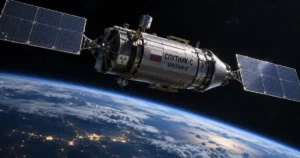
Starlink Used in Iranian Attacks on U.S. Troops, Musk Reacts
Elon Musk confronts Iran’s use of Starlink in attacks on U.S. forces, sparking debate over tech’s dual role in repression and resistance.

4 min read
When Elon Musk learned that Iran had used Starlink terminals, originally intended for Iranian dissidents, to attack U.S. troops earlier this year, he was furious, The Washington Post reported. The incident unfolded in the early weeks of March, as the United States and Israel launched airstrikes against Iran in retaliation for its ballistic missile and drone attacks on U.S. military bases across the Middle East.
Musk’s anger was triggered by intelligence reports showing that Iran had exploited Starlink to wage its military campaign against American forces. According to two individuals familiar with internal company discussions, the company’s team concluded that the Islamic Republic was using the service to conduct attacks on U.S. service members. One such attack occurred on March 1, when an Iranian drone strike killed six U.S. troops at a command center near the Shuaiba port in Kuwait. While the Post did not confirm whether Starlink played a direct role in that attack, it highlighted the broader concern over the technology’s misuse.
Instead of waiting for congressional hearings or government task forces, Musk acted swiftly. Within hours of the Kuwait attack, SpaceX implemented new security measures, requiring identity verification for aircraft traveling faster than 100 mph to connect to Starlink. He also targeted the resale market, which had made it too easy for Starlink terminals to fall into the wrong hands. These steps aimed to prevent further unauthorized use of the service by Iran, but they also raised ethical and practical concerns.
The challenge lies in balancing security with the needs of Iranian dissidents who rely on Starlink to bypass the regime’s strict internet censorship. Every new restriction SpaceX introduces makes it harder for these individuals to access the internet, which is crucial for their ability to communicate and share information about the government’s actions. Analysts suggest that while SpaceX could deactivate terminals within Iran if it chose to, it likely does not do so to preserve the service for dissidents and ordinary Iranians seeking to circumvent internet controls.
“Internet and social media is the only way for Iranians to voice what’s happening inside the country,” said Holly Dagres, a senior fellow at the Washington Institute think tank. This perspective highlights the dual nature of Starlink as a tool of both repression and resistance. While the Iranian regime uses it to monitor and control its citizens, dissidents and activists use it to expose the government’s actions to the world.
Analysts and industry experts have weighed in on the dilemma faced by SpaceX. A satellite industry executive told The Washington Post, “Either they shut down service completely over the country, which means that even the dissidents cannot use it, or they leave the service… which means the [Islamic Revolutionary Guard Corps] can potentially use it in their weapon systems.” This underscores the complexity of the situation, where the same technology can serve opposing sides in a conflict.
The Post also referenced a recent incident in Ukraine, where SpaceX effectively disabled every terminal moving faster than 45 mph after receiving video of a Russian attack drone with a Starlink terminal mounted on its wing. Ukraine circumvented the speed limit by providing SpaceX with an approved list of terminals operating within the country. This example demonstrates that a targeted fix is possible when the good guys can be identified, offering a potential model for how SpaceX might address the issue in Iran without compromising the service for legitimate users.
Political scientist Daniel Schatz, an author on security in the Middle East, emphasized the responsibility of the U.S. administration to prevent repressive regimes like Iran’s from using American communications technology to entrench their power or attack U.S. forces. He also highlighted the need to support the people risking their lives for freedom, democracy, and human rights. “Starlink can be a tool of freedom in the hands of an Iranian protester and a tool of repression in the hands of the regime,” Schatz noted in an email to Newsweek.
The debate over Starlink’s use in Iran has broader implications for U.S. foreign policy and the role of technology in global conflicts. While the U.S. government has not taken direct action to block Starlink within Iran, analysts question why the administration has not done so. Shutting down service in the country would leave dissidents without access to the internet, effectively cutting them off from the global community. It would also mean losing a valuable intelligence source, as the regime’s actions and internal dynamics could be monitored through satellite access.
Despite the ethical and strategic challenges, the incident highlights the growing importance of satellite technology in modern warfare and political resistance. As nations continue to develop and deploy such tools, the balance between security, freedom, and international relations becomes increasingly complex. The case of Starlink in Iran serves as a microcosm of this broader issue, raising questions about the responsibilities of technology companies and governments in an interconnected world.
Source: PJ Media