China Claims Reunification Is Inevitable Despite Low Support in Taiwan
Taiwan’s local elections show low support for unification, as China insists on eventual reunification.
1 min read
Taiwanese voters cast their ballots in key local elections amid rising tensions with China, with the opposition Kuomintang securing more city leadership posts. Despite the results, China reiterated its stance that Taiwan’s future lies under its control.
China’s Reunification Stance
Following the November 28 election, China’s Taiwan Affairs Office spokeswoman, Zhang Han, stated that ‘the motherland must and will inevitably be reunified,’ according to Reuters. Beijing emphasized that regardless of the election outcome, the goal of reunification remains unchanged. Zhang also warned of crackdowns on independence advocates and opposition to foreign interference.
Public Opinion in Taiwan
A survey conducted by National Chengchi University’s Election Study Center revealed that only 1.8% of Taiwanese adults favor immediate unification, with 4.5% preferring a future move toward unification. The majority, 39%, support maintaining the current status quo indefinitely. Over 86% of respondents agreed that Taiwan’s 23 million people should decide the island’s future.
Electoral Results and Political Dynamics
The election results saw the Democratic Progressive Party, led by President Lai Ching-te, gaining 10 city and county leadership posts, doubling its previous tally. The Kuomintang, which favors closer ties with Beijing, retained control of Taipei and neighboring New Taipei, and expanded its influence in Penghu. The local elections also saw the approval of a referendum to abandon the goal of a nuclear-free homeland.
Security and Military Activity
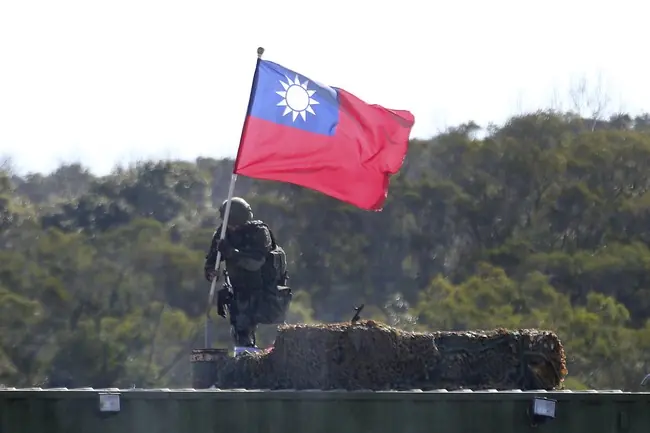
As the election approached, Chinese military aircraft and naval vessels were observed crossing the Taiwan Strait’s median line, with 27 flights crossing the dividing line. Taiwan’s Defense Ministry reported these movements as part of ongoing tensions. The island is set to elect a president in 2028, with the Kuomintang’s leadership showing interest in closer relations with Beijing.
Source: PJ Media