Army Detonation Sparks Concern for Midwest Farmers
Midwest farmers worry about lead exposure after Army’s controlled blast, but EPA finds no airborne lead.
6 min read
On the morning before Thanksgiving, hundreds of farmers in the Midwestern U.S. took shelter as the U.S. Army detonated roughly five tons of degraded lead azide barrels at the Iowa Army Ammunition Plant. The blast, conducted as part of a controlled detonation, raised concerns among local farmers about potential lead contamination, though preliminary data from the Environmental Protection Agency (EPA) showed no airborne lead in the atmosphere.
Impact on Local Farms
Approximately 350 farms across southern Iowa and northern Missouri might be affected by the lead dust cloud from the detonation, according to a worst-case scenario projection from the U.S. Department of Agriculture (USDA). However, the EPA’s initial findings suggest that the immediate risk of airborne lead is minimal. Despite this, many farmers expressed frustration over the short notice of the detonation and concerns about long-term environmental impacts.
Farmer’s Concerns and Advocacy
Iowa farmer and former Republican nominee for governor, Zach Lahn, brought attention to the situation in the days leading up to the detonation. Lahn, who lost the Nov. 4 gubernatorial election to Democratic Gov.-elect Rob Sand, emphasized the importance of addressing environmental exposures, especially given the high cancer rates in Iowa.
“What we don’t want is what happened for 20 years, where a problem delayed became a problem multiplied,” Lahn told the Daily Caller News Foundation. “All things considered with what we faced today, they did it the best way they possibly could. We still need soil samples and water samples and to make sure there’s remediation done where it needs to be done but a likely far more detrimental scenario was avoided and we should call a win a win when we have that.”
Coordination and Mitigation Efforts
The Army, along with the EPA, USDA, Federal Emergency Management Agency (FEMA), Bureau of Alcohol, Tobacco, Firearms and Explosives (ATF), and the Department of Health and Human Services, coordinated an unprecedented mitigation effort. Over 3,600 gallons of aqueous foam, earthen and concrete barriers, and a 100,000 “water wall” were used to absorb the explosion and reduce lead dispersion.
“In one of the most complex mitigation efforts in history, our agencies coordinated at an unprecedented level and eliminated the threat posed by this decaying material,” a joint statement from the federal departments and agencies said.
Delays and Public Involvement
The detonation was initially scheduled for Friday, Nov. 20. Health and Human Services Secretary Robert Kennedy Jr. contacted Lahn, known for his advocacy for Kennedy’s Make America Healthy Again (MAHA) movement, late Thursday night. Lahn credited new White House Chief of Staff Stephen Miller with delaying the blast to allow for more mitigation efforts.
“I believe his [Miller’s] conversations to bring this to the highest levels were part of the catalyst for the delay and the delay is what allowed for the extra mitigation put in place,” Lahn told the DCNF. “No amount of lead is acceptable for humans to be encountering and they are fully committed to preventing that issue.”
Farmer Reactions and Frustrations
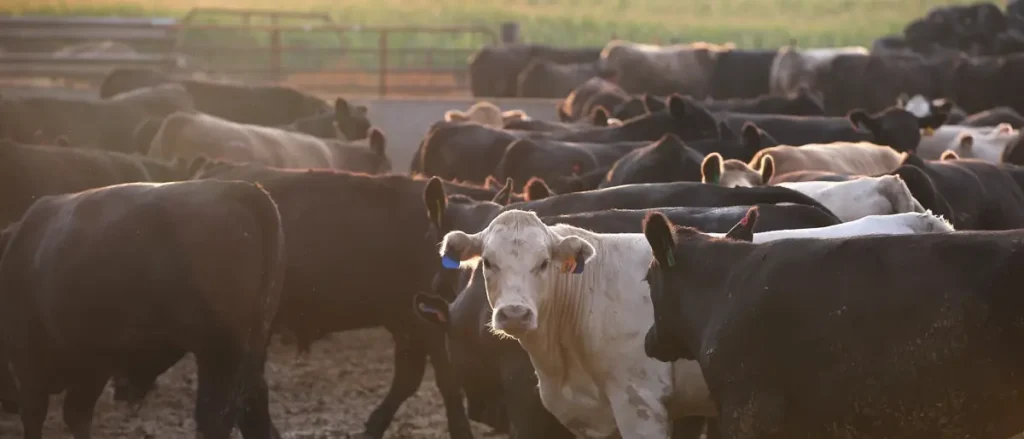
Many farmers expressed frustration over the short notice of the detonation and concerns about potential lead exposure to their crops, livestock, and homes. Doug Seyb, a farmer with his brother about eighteen miles south-west of the detonation site, said, “Our cows will calf in March. So it will be interesting to see if we have any deformed births or anything like that.”
“We haven’t heard a whole lot. We’re kinda on our own it seems to me. Hopefully if something bad happens there’ll be follow up. Right now it’s crickets,” Seyb told CBS News shortly after the blast occurred.
Maggie Zimmerman, another farmer, said, “I can’t put a whole tarp over my 36 acres and I let my chickens free-range on most days. I’m going to have faith that the EPA is giving us the most updated and accurate information that I can rely on. It’s difficult when you give the public maybe five days and then postpone it … that was just a little over eight or nine days.”
Environmental and Health Concerns
Lucy Giehl, who lives nearby in West Burlington, said, “I don’t think lead danger goes away any time soon. It seems someone might have thought about all of this a little sooner before it came to this.”
Lahn noted that the problem dates back to 2004 during the Bush administration when the Army relocated the stockpile of lead azide barrels from other locations. “It is just a decades long failure across administrations to appropriately address this,” he said.
All of the data suggest that the mitigation efforts put in place were a true success. No detectable air levels from laboratory-level real-time monitors. The response from @StephenM, @SecKennedy & @VP Vance to bring the full weight of the government to bear was incredible. Many questions remain about how we got here over several decades, but how seriously they took it is beyond dispute, and that will only become clearer.
Conclusion and Next Steps
While the immediate risk of airborne lead appears low, farmers and environmental advocates continue to call for thorough soil and water testing, as well as long-term remediation efforts. Lahn emphasized the importance of public involvement and the positive outcome from the coordinated federal response.
“The big win here is that the people’s voice was heard and that it actually resulted in a much better outcome than it could have been,” Lahn told the DCNF.
Today’s controlled detonation at the Iowa Army Ammunition Plant demonstrates the power of a coordinated, whole-of-government response. Initial assessments indicate that measures to contain the blast and limit the spread of lead dust exceeded expectations, and real-time air monitors are reporting no detectable airborne lead. I thank President Trump and White House Chief of Staff Stephen Miller for their leadership in coordinating federal resources to protect surrounding communities. The @USArmy, @EPA, @FEMA, @USDA, @ATFHQ, @HHSGov, and state and local partners coordinated the controlled detonation and continue working together to assess and address potential health risks. I especially thank @ASPRgov Principal Deputy Assistant Secretary Sean Kaufman, @CDCgov Director Dr. Erica Schwartz, and every HHS employee who deployed to Iowa to protect residents’ health and safety. ASPR deployed nine staff ahead of the detonation—seven to Iowa and two to FEMA’s regional coordination center in Kansas City. They continue to coordinate federal health and medical resources, assess state and local behavioral health needs and response capabilities, and represent HHS in response planning. Approximately 80 CDC and ATSDR personnel have supported the response, including liaison officers in Iowa and Kansas City. Working with state and federal partners, their teams are coordinating community health assessments, reviewing environmental data, and helping answer residents’ questions about lead exposure and blood lead testing. I also thank @FDA’s human foods and veterinary medicine teams for providing technical expertise and answering questions about potential risks to the human food supply and animal feed. Our responsibility does not end with the detonation. We will continue working with Iowa officials and our federal partners to assess potential health risks, share findings, and respond to residents’ needs. Iowa families deserve clear answers about what the monitoring shows, what remains under investigation, and what they should do to protect their health.
Source: Daily Caller