Lincoln’s Gettysburg Address: A Legacy of Liberty and Equality
Abraham Lincoln’s 1863 Gettysburg Address remains a cornerstone of American ideals, inspiring generations.
2 min read
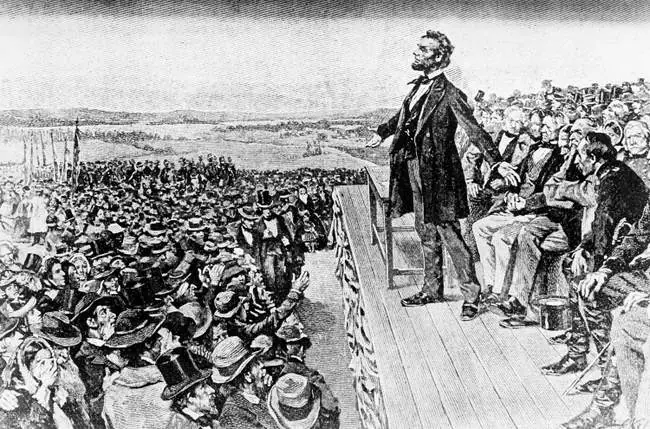
On November 19, 1863, President Abraham Lincoln delivered a brief yet profound speech at the dedication of the Gettysburg National Military Park. Known as the Gettysburg Address, it became one of the most iconic speeches in American history, resonating with themes of liberty, equality, and national unity.
The Speech and Its Meaning
Lincoln began with the famous line: “Four score and seven years ago our fathers brought forth on this continent, a new nation, conceived in Liberty, and dedicated to the proposition that all men are created equal.” He reflected on the ongoing Civil War, emphasizing the struggle to preserve a nation founded on these principles.
“Now we are engaged in a great civil war, testing whether that nation, or any nation so conceived and so dedicated, can long endure,” Lincoln said. He acknowledged the sacrifices of the soldiers who had fought at Gettysburg, stating that their actions had already consecrated the battlefield.
“The brave men, living and dead, who struggled here, have consecrated it, far above our poor power to add or detract,” Lincoln declared. He also expressed the belief that his words would not be remembered, but the actions of the fallen would.
A Vision for the Future
Lincoln concluded with a call to action for the living to continue the unfinished work of those who had died in the war. “It is rather for us to be here dedicated to the great task remaining before us — that from these honored dead we take increased devotion to that cause for which they gave the last full measure of devotion,” he said.
“That we here highly resolve that these dead shall not have died in vain — that this nation, under God, shall have a new birth of freedom — and that government of the people, by the people, for the people, shall not perish from the earth,” he concluded, a phrase that has become a symbol of American resilience.
Historical Context
The Gettysburg Address was delivered in the wake of the Battle of Gettysburg, one of the bloodiest battles of the Civil War. The Confederacy had committed war crimes in Pennsylvania, including the kidnapping and enslavement of Black people. Despite these actions, the Union prevailed, and the speech reaffirmed the nation’s commitment to freedom and equality.
Lincoln’s speech not only honored the fallen but also redefined the purpose of the war, emphasizing the fight for the survival of a nation founded on the principles of liberty and equality.
Source: PJ Media