Anthropic Raises $81B in Largest IPO, Surpasses SpaceX
Anthropic’s $81 billion IPO sets new Wall Street record, surpassing SpaceX’s previous high.
7 min read
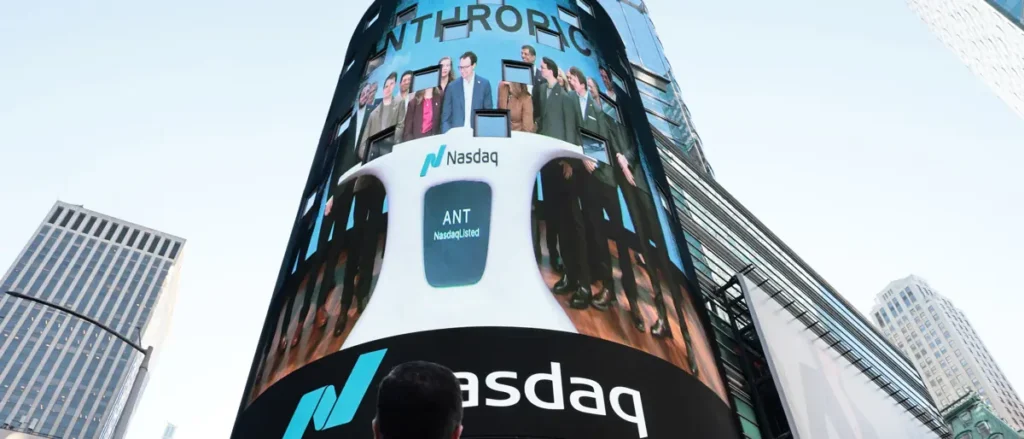
Anthropic has set a new record for the largest Wall Street debut in history, raising $81.3 billion with its public offering. The artificial intelligence lab sold 980 million shares at $83 each, giving the company a public valuation of approximately $1.5 trillion, according to Reuters. This marks the first time a frontier AI developer has gone public, offering American citizens the potential to influence the company’s direction.
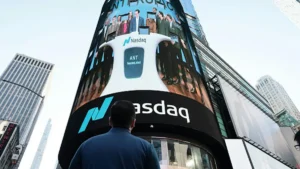
Musk’s SpaceX previously held the record, raising $75 billion after selling 556 million shares for $135 each in June. The resulting valuation of more than $2 trillion made Musk the world’s first trillionaire. Anthropic CEO Dario Amodei and his sister Daniela, the company’s co-founder and president, rang the Nasdaq’s opening bell in New York City to celebrate the company’s public stock market debut. The event was shared by the Nasdaq in a Thursday X post.
.@AnthropicAI $ANT Co-Founders @DarioAmodei and @DanielaAmodei take the @NasdaqExchange podium as the company marks its initial public offering. https://t.co/eMxJO65kaF
“There is much work still to be done, and the most difficult safety work lies ahead of us,” Amodei said in his Thursday speech, before ringing the bell. (RELATED: Here’s How Anthropic’s Latest Products Could Automate Your Job)
Remarks from Anthropic CEO @DarioAmodei on our initial public offering: My co-founders and I started Anthropic because we believe that the most powerful technology of our time should be built for the benefit of humankind. Daniela and I lost our father to a disease that, just a few years later, became curable. I started my career in biology, hoping to help future cures come sooner. In the lab, I saw the vast thicket of complexity that scientists face when they’re trying to understand disease and develop new treatments. So many of the scientific tools that can cut through that thicket—tools for gene editing, gene synthesis, controlling brain cells with light—started as pure ideas. In other words, they came from thinking. From intelligence. Human intelligence has already made diseases like plague, smallpox, and polio history for most of the world. But progress on other diseases has been too slow for so many patients and their families. Going from a great idea to a treatment can take decades: it took many years from the first discovery of a strange repeating pattern in DNA to the approval of the first treatment for a disease using CRISPR. Nature is full of these patterns. But we’ve had too little intelligence to decipher most of them; too few scientists, with too little time. Now we can build that intelligence. Whether it’s protein folding, drug design, cancer genetics, or clinical trial administration, scientists across many areas of biology and medicine are finding Claude can help them do their research in a fraction of the time it would’ve taken just a couple of years ago. I believe sufficiently powerful AI, working in concert with humans, could compress a century of scientific and medical progress into a decade. I don’t want to get ahead of myself. At this point all we have are early results. Experiments and clinical trials will still take time. And although they involve slow and ponderous processes, I believe those processes can be substantially accelerated by AI. We hope that in the future fewer families miss a cure by just a few years. Medicine is just a particularly vivid example, but there are many others. Our customers—the world’s most ambitious companies, nonprofits, and individual people—are already applying the intelligence we’ve built to stimulate economic growth; lift people out of poverty; protect democracy and free societies; even make everyday services like the DMV work better. We’re proud to work alongside them. And I’m extremely optimistic about what we can do together in the future. At the same time, we have always been honest that this technology has very real risks. These range from misuse of the technology by individuals or nation-states, to economic disruption, to losing control of AI systems. We discuss these risks not because we think they are inevitable, but because we think they are avoidable. Avoiding them depends on the choices made by the people building AI. There is a gigantic difference between how AI will go if we pay little attention to safety, versus how it will go if we are obsessed with safety. And an obsession with safety and with public benefit has been woven into Anthropic’s DNA from the start. From safeguards against biological and cyber risks, to alignment training and testing, to looking inside our models like an X-ray, Anthropic has pioneered methods for understanding and steering the behavior of AI systems. There is much work still to be done, and the most difficult safety work lies ahead of us. The incredible talent of the company that has enabled us to build the most capable AI systems will need to be directed, even more so than it has already, towards double- and triple-checking that those AI systems are safe and secure. And to state it unequivocally, we will pace the training and deployment of AI systems, taking as long as is necessary to have confidence that they are safe and will remain under human control. We will not bend to either business or political pressure. Today puts the company in a stronger financial position, and in doing so only strengthens our resolve to do the right thing. If we can show it’s possible to make the right choices on safety and still build an incredibly successful company, others in our industry will be inspired to do the same. We call this a race to the top. When the race to the top is working properly, it doesn’t matter which company has the best models—everyone wins because everyone is building safely. The race to the top works best when driven from the front of the pack, and we fully hope and expect to do so, but the goal is to make the whole industry better, regardless of whether Anthropic is winning or losing at any given time. The advent of machine intelligence is one of the seminal moments in human history, and we have a rare opportunity to shape it for the better. This moment is bigger than any one company, or any one country. It will take all of us, working together, to ensure this technology goes well for us and the many generations to come. Starting today, we hope that you’ll join us on this mission.
“And to state it unequivocally, we will pace the training and deployment of AI systems, taking as long as is necessary to have confidence that they are safe and will remain under human control,” Amodei said, in remarks shared by the company in a Thursday X post. “We will not bend to either business or political pressure. Today puts the company in a stronger financial position, and in doing so only strengthens our resolve to do the right thing.”
Anthropic did not immediately respond to the Daily Caller News Foundation’s request for comment. More than 400 Anthropic employees may be worth roughly $100 million following the company’s public offering, CNBC reported. Amodei called on the AI industry to “Pace the Frontier” in his Sept. 12 essay explaining why development of the technology must be slowed.
“This technology needs you — not your trust, not your use, but your voice,” Daniela Amodei said in her Nasdaq speech, CNBC reported. “Intelligence is now something humans can build. What we choose to build with it is up to all of us.”
Musk, a critic of Anthropic, said at the New York Times DealBook Summit Wednesday that the AI lab told him it wants “an incremental 10 gigawatts” of computing power from SpaceX. Musk called it “a big number.”
“No one I met at Anthropic set off my evil detector for what it’s worth,” Musk said.
Source: Daily Caller