US Army’s Detonation Plan Risks Public Safety With Plywood Replacements
US Army replaces blast doors with plywood, increasing risk of uncontrolled lead azide explosion in Iowa.
2 min read
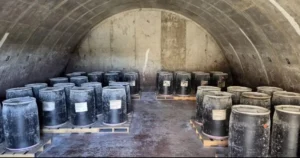
The U.S. Army has raised concerns over public safety after replacing blast doors with temporary materials at the Iowa Army Ammunition Plant. The decision, made in preparation for controlled detonations of nearly five tons of degraded lead azide, has drawn criticism from legal experts and environmental engineers.
Detonation Dilemma and Safety Concerns
According to court filings first reported by The Washington Sun, the Department of Justice has raised alarms about the Army’s plan. Attorneys for the DOJ stated that removing blast doors and replacing them with plywood and foam insulation has made the situation more dangerous. As temperatures drop, the risk of an uncontrolled explosion increases due to the formation of crystals in the lead azide.
The attorneys warned that the crystallized material could break more easily in freezing conditions, potentially causing a chain reaction detonation. This could lead to an uncontrolled dispersal of lead azide into the environment, posing a serious threat to public safety. Recent temperature fluctuations have further exacerbated the risk, according to the legal documents.
Historical Concerns and Expert Opinions
KCRG, a local Iowa outlet, reported that the issue of lead azide has been a concern for the Pentagon for the past 40 years. Dr. Ron Sahu, a combustion and environmental engineer, explained that if stored properly, lead azide should remain stable for a long time. However, improper storage conditions can lead to the formation of crystals, which increase the risk of an explosion.
Sahu emphasized that the key to preventing such an incident lies in careful monitoring and proper storage conditions. The current setup, with blast doors replaced by temporary materials, appears to compromise these essential safeguards.
Legal and Environmental Implications
The Army’s decision has not only raised safety concerns but also environmental worries. The potential for lead azide to spread into the environment could have long-term health and ecological impacts. Legal experts argue that the Army has a responsibility to ensure that all precautions are taken to prevent such a scenario.
As the Army prepares to conduct the controlled detonations, the situation remains a focal point for both legal and environmental watchdogs. The public is being urged to stay informed and vigilant, as the risks associated with this plan continue to grow.
Source: Daily Caller