Army Unveils Lead Dust Plume Map Ahead of Detonations
U.S. Army releases map showing toxic lead dust plume path ahead of controlled detonations at Iowa plant.
3 min read
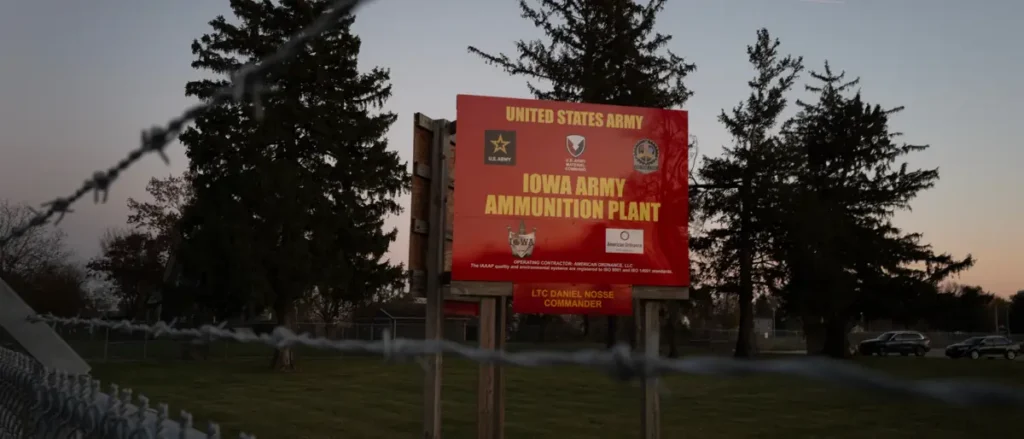
The U.S. Army has released a new map showing the projected path of a toxic lead dust plume that will be released into the air following a scheduled detonation of lead azide explosives at the Iowa Army Ammunition Plant (IAAP) on Wednesday morning. The map indicates the plume will blow southwest from IAAP in Middletown, passing over a pocket of southeastern Iowa and then entering northern Missouri.
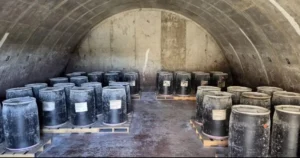
The Army plans to conduct two controlled detonations of nearly five tons of degraded lead azide at the IAAP on Wednesday. The blasts were cleared to move forward after the Eighth Circuit U.S. Court of Appeals lifted an administrative stay and denied an emergency pause request. The detonations, originally slated for Nov. 20 and then Nov. 23, have faced delays and pushback from some local residents, state officials, and environmental groups, which won the temporary pause after a lawsuit was filed.
President Donald Trump on Monday ordered a halt pending the court’s action and input from incoming Iowa Governor Rob Sand. The appeals court later cleared the way, and Acting Army Secretary Adam Telle announced the Army would proceed with the detonation on Wednesday morning.
“A routine monitoring inspection on March 11, 2026, found that decades-old, stored lead azide had partially crystallized, making it increasingly sensitive to friction, shock, and cold winter temperatures,” the U.S. Army said Tuesday. “This deterioration created a new and growing risk of spontaneous, uncontrolled detonation. Lead azide is a highly sensitive explosive that becomes increasingly unstable as it deteriorates, making it vulnerable to accidental detonation from even slight friction or movement.”
In a court filing Saturday, Department of Justice attorneys argued it is necessary to detonate the explosives as soon as possible because winter temperatures could “cause an uncontrolled dispersal of lead azide into the environment.” “An uncontrolled detonation of nearly five tons of primary explosive would endanger soldiers, contractors, and the surrounding communities, all without many of the protective measures meant to minimize the risks from the blast — harm that cannot be undone,” the DOJ wrote.
The attorneys added that, “The bunkers, where the barrels are located, are now more vulnerable to temperature changes because the blast doors were removed in preparation of the controlled detonation and cannot be replaced.”
NEW: The U.S. Army has released updated maps projecting the path of a toxic lead-dust plume from a controlled detonation set for Wednesday The latest projection shows the plume blowing southwest from the Iowa Army Ammunition Plant in Middletown, then continuing into northern Missouri
Video posted Tuesday by Newsmax correspondent Joe Moeller shows federal officials knocking on doors and handing out flyers to Middletown residents. The flyer says the federal government recommends residents evacuate the area and lists a Salvation Army in Burlington, Iowa, as a temporary shelter, according to Moeller.
IOWA: Federal officials are going door to door in Middletown, handing out tape and flyers ahead of Wednesday’s detonation. The flyer says the federal government recommends residents leave during the blast and lists the Salvation Army in Burlington as a place to go. https://t.co/QsmM2cQcl9
Source: Daily Caller