California’s High-Speed Rail: A $126B Promise with No Track
California’s high-speed rail project has ballooned to $126 billion with no track laid, as politicians insist progress is being made.
2 min read
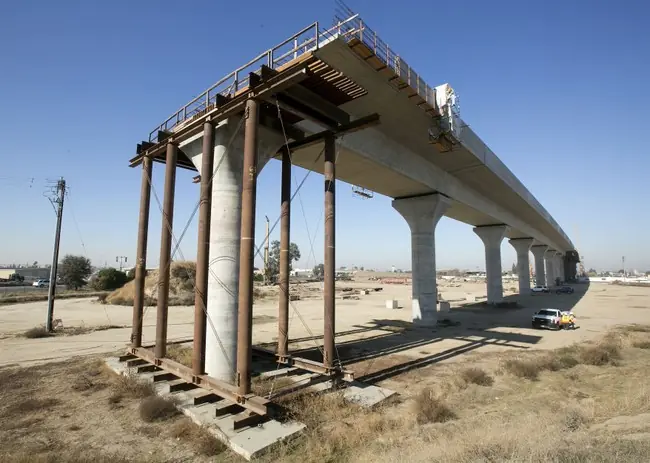
California politicians once promised a super-fast train that would whisk riders from Los Angeles to San Francisco in about two and a half hours. Eighteen years and more than $15 billion later, no track has been laid. Despite this, Governor Gavin Newsom insists, ‘We’re actually making this project work.’ The question remains: what does ‘work’ mean to politicians?
The original projected cost for the San Francisco to Los Angeles line was $33 billion, but it has now skyrocketed to an estimated $126 billion. Newsom recently stated, ‘There simply isn’t a path to get from Sacramento to San Diego, let alone San Francisco to L.A.’ However, he claimed the state has the capacity to complete a high-speed rail link between Merced and Bakersfield, a shorter route that will still cost more than the original promised cost for the entire San Francisco to L.A. line.
Even more hilariously, the train won’t have a stop downtown. The proposed Merced stop will be about four miles away, and Bakersfield’s would be five miles from the planned downtown station. Politicians often promise something wonderful, then it costs more and takes longer. The answer is always: give us more money!
Adrian Moore, vice president of the Reason Foundation, once remarked, ‘This thing is the boondoggle of boondoggles.’ A state investigation found hundreds of thousands of dollars in spending on luxury flights, rides to nightclubs, a tiki bar, and a cigar lounge. When that investigation was made public, the project’s boss quit.
California’s political leaders continue to be cheerfully committed, with Newsom saying, ‘We’re going to be laying track soon.’ Meanwhile, private investors have yet to contribute, as Moore pointed out, ‘Private money will invest in something where they can make a profit… There’s no way this project is ever going to pay for itself.’
Despite the project’s failures, California’s politicians remain steadfast. They have a large population that might use a train and big cities that could benefit from alternative transportation. Other countries have successfully built fast trains, but California has faced environmental lawsuits, union work rules, and poor management. Contractors’ crews sometimes sit idle, and the state has paid out $5.7 billion in change orders and delay fees.
Taxpayers who paid billions are still waiting for a ride. So why do voters keep inviting politicians to do such things? The answer seems to be a combination of political will and the allure of public spending, even when the results are questionable.
Source: PJ Media