Nvidia’s Loss May Hurt China’s Tech Ambitions
Nvidia’s departure could impact China’s tech independence, as analysts question the company’s role in the country’s AI strategy.
4 min read
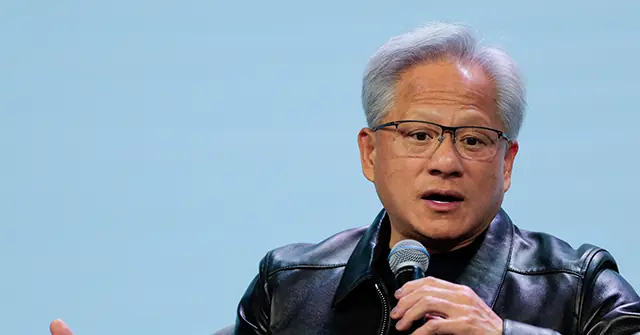
Jensen Huang’s departure from Nvidia has sparked concerns about the future of the company and its impact on China’s technological ambitions. While many worry about the implications for Nvidia, the real fallout may be felt in Beijing. Huang, a key figure in the company’s expansion into China, was a powerful advocate for maintaining American chip exports to the country. His absence leaves a significant gap in China’s efforts to secure advanced technology for its artificial intelligence initiatives.
The Role of Huang in China’s Tech Strategy
Huang’s influence extended beyond business; he positioned himself as a national security asset to the U.S. government. He argued that selling chips to China would keep its AI industry reliant on American technology, a claim that has been met with skepticism. Critics suggest that this approach was flawed, as Beijing has long pursued a strategy of buying American technology to reverse-engineer it and develop its own alternatives. This strategy has been evident in the evolution of China’s semiconductor industry, which has grown despite its reliance on foreign technology.
Analysts point out that Huang’s efforts to maintain a steady supply of chips to China were not just about profit but also about shaping the trajectory of China’s technological development. His stance aligned with the Trump administration’s concerns about China’s growing influence in AI, and he framed his work as a form of patriotic duty. However, this narrative has been questioned, with some suggesting that the U.S. government’s focus on China’s technological ambitions may have been more about geopolitical strategy than genuine security concerns.
China’s Struggles with Tech Independence
Despite its ambitions, China faces significant challenges in achieving full technological independence. Catherine Thorbecke of Bloomberg Opinion notes that China’s enthusiasm for self-reliance has outpaced its ability to deliver. Companies like Huawei have acknowledged their inability to meet domestic demand, highlighting the gap between aspirations and reality. Losing access to Nvidia’s chips before local alternatives are ready could exacerbate these challenges, particularly in critical sectors like AI development.
Huang’s departure is a setback for China, which has been working to reduce its dependence on foreign technology. However, the transition is not as simple as cutting off foreign suppliers. China’s strategy has been to integrate foreign technology into its own development processes, a move that has allowed it to build a robust domestic semiconductor industry. The challenge now is whether China can replace Nvidia’s chips with its own alternatives in a timely manner, without compromising its AI progress.
Nvidia’s Resilience and the Impact on the U.S.
While the loss of Huang is significant, Nvidia is not without its own strengths. The company has a strong research and development bench, and its software, engineering, and customer relationships are expected to remain stable. The departure of a founder does not necessarily spell disaster for a company, especially one with a well-established infrastructure. However, there are concerns about the potential shift in strategy under a new leadership.
Huang’s successor is likely to be more risk-averse, which could slow down the pace of ambitious AI projects that Nvidia has been instrumental in advancing. This shift may have implications for the U.S. AI industry, as Nvidia has played a key role in financing and enabling large-scale AI initiatives. A more cautious approach could result in a slower expansion of AI investment, which some analysts suggest could be beneficial in preventing a potential economic downturn.
Uncertainty in Sales and Future Implications
One of the biggest uncertainties is the extent of Nvidia’s sales to China. While some estimates suggest that direct sales to China account for about seven percent of the company’s revenue, many analysts believe this is an underestimate. A significant portion of Nvidia’s foreign sales may be indirectly tied to China, with non-U.S. entities acting as fronts for Chinese demand. Some analysts estimate that up to a third of foreign sales could be rooted in China’s demand, highlighting the complexity of tracking the company’s global exposure.
This uncertainty raises questions about the broader implications of Huang’s departure. If a significant portion of Nvidia’s sales to China were to decline, it could impact the company’s financial performance. However, the company’s strong market position and diverse customer base provide a buffer against such risks. The challenge lies in how the new leadership navigates the geopolitical landscape and balances the interests of the U.S. and its global partners.
The Broader Implications for U.S. Tech Policy
The situation highlights the complex interplay between technology, geopolitics, and business strategy. As the U.S. continues to navigate its relationship with China, companies like Nvidia are caught in the middle, balancing profit motives with national security concerns. The departure of Huang serves as a case study in how individual leaders can shape the trajectory of global technology development and how their absence can create both challenges and opportunities.
For the U.S., the challenge is to ensure that its technological leadership is not undermined by the strategic decisions of private companies. While Huang’s departure is a setback, it also presents an opportunity for the U.S. to reassess its approach to technology exports and national security. The future of AI development will depend on how effectively the U.S. and its allies can navigate these complex dynamics, ensuring that the benefits of technological innovation are shared while safeguarding national interests.
Source: Breitbart