Treasury Criticizes Commerce Over Nvidia Chip Export Delays
Treasury Secretary Scott Bessent criticizes Commerce Department for failing to blacklist Megaspeed amid Nvidia chip diversion concerns.
3 min read
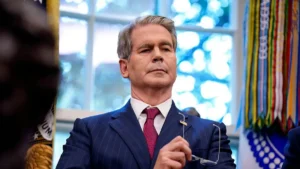
Treasury Secretary Scott Bessent publicly criticized the Commerce Department on Friday for failing to blacklist a company suspected of helping divert advanced Nvidia chips to China, escalating pressure on Commerce Secretary Howard Lutnick. Bessent said the Treasury, War and State departments, along with the U.S. Trade Representative, had supported placing Singapore-based Megaspeed on the government’s export-control blacklist for months. But Commerce, which had the authority to make the move, had not acted.
Bessent Calls Out Commerce for Delay
“Commerce has the pen — Commerce BIS has the pen,” Bessent told CNBC’s “Squawk Box.” “And you will have to ask them about their internal process.” The remarks put a Cabinet-level dispute over sensitive technology exports into public view. They came one day after Senate Banking Committee Chairman Tim Scott (R-SC) requested testimony from Lutnick and former Nvidia CEO Jensen Huang as Congress investigates the scandal.
Pressure Mounts on Lutnick
Bessent said he was frustrated by reports of Nvidia chips reaching China, particularly after President Donald Trump made clear that Beijing should not receive chips more advanced than the company’s H100 processors. “I am frustrated when President Trump made it very clear that China should not receive any NVIDIA chips above H100s,” Bessent said. “And so any leakage is very frustrating because it hurts our great companies and in the AI race it gives the Chinese an advantage.”
Focus Shifts to Nvidia’s Responsibility
Bessent also sought to shift attention away from Huang’s personal conduct and toward whether Nvidia adequately monitored its customers and prevented its technology from reaching unauthorized buyers. “I think there is a lot of leakage in the system and we are constantly working to close that down,” he said. “The real story here should be: Did NVIDIA know their client, and was there a robust effort at NVIDIA to make sure that there was no leakage and that they were selling to what were obviously pass-through shell companies?” Bessent added that anyone at Nvidia responsible for failing to prevent such transfers should be held accountable.
Megaspeed at Center of Controversy
The dispute centers on Megaspeed, a Singapore-based data center company that U.S. officials have investigated over allegations that it helped divert advanced Nvidia chips to China. The company has reportedly purchased billions of dollars in Nvidia semiconductors, and authorities have examined whether some were illegally smuggled into China. Megaspeed executive, Alice Huang, was reportedly involved in a romantic relationship with Jensen Huang, who resigned as Nvidia’s CEO Thursday as the scandal grew. U.S. authorities have investigated allegations that Alice Huang had ties to Chinese intelligence, though Attorney General Todd Blanche said Thursday that the Justice Department had not reached a conclusion about whether she was a Chinese spy. China has denied the espionage allegations.
Commerce Department’s Role
The Commerce Department’s Bureau of Industry and Security has authority over the export controls at the center of the controversy. Bessent said Treasury and other agencies had supported adding Megaspeed to the entity list for months, with his deputy pushing for action at the departmental level. His comments followed reports that he confronted Lutnick during a White House Situation Room meeting last week over the delay in restricting Megaspeed. Bessent declined to discuss the reported exchange, telling CNBC, “We don’t repeat conversations in the Situation Room.”
The Commerce Department previously denied that the confrontation took place. A department spokeswoman also told CNBC on Friday that Lutnick had proactively agreed to testify voluntarily before the Senate Banking Committee. Scott requested that Lutnick appear at a public hearing on December 10, while Huang was asked to testify on December 3. Scott warned in his letter to Huang that the committee could use subpoenas if he refused to appear voluntarily.
Source: Daily Wire