USDA Funds Experiments on Captive Coyotes, Including Deliberate Mate Killing
Taxpayers fund cruel coyote experiments at USDA lab, including mate killings to study grief.
2 min read
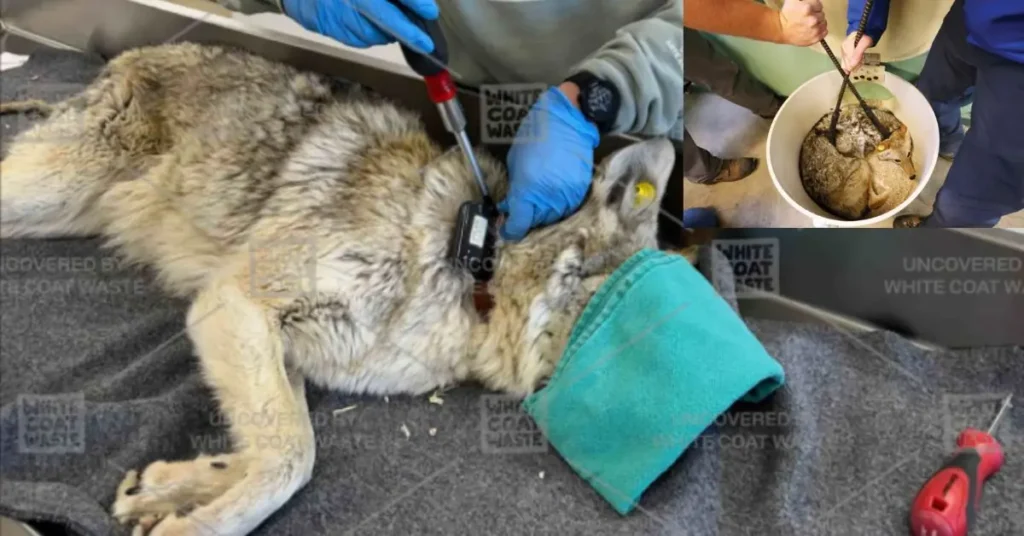
U.S. taxpayers are funding experiments on captive coyotes, including the deliberate killing of mates to study grief and bonding behavior, according to a new investigation by White Coat Waste. The research, conducted at the USDA’s Predator Research Facility in Millville, involves capturing wild coyotes, breeding them in captivity, and separating bonded pairs to observe the effects of loss on the surviving animals.
Experiments Focus on Coyote Monogamy and Grief
The study, led by neuroscientist Sara Freeman of Utah State University, examines the behavioral, hormonal, and neural basis of coyote monogamy. The research includes procedures such as vasectomies, forced restraint, blood draws, brain-targeting drug injections, and the deliberate killing of one member of a bonded pair to observe the emotional impact on the surviving coyote.
According to records obtained through a Freedom of Information Act request, the National Science Foundation awarded a total of $1.13 million for these experiments, with the first grant of $583,214 issued in December 2024 and an additional $548,775 added in September 2025. The USDA approved the grief protocol in December 2025, which remains active through March 2030 and authorizes the use of up to 78 captive coyotes.
Long-Term Captivity and Ethical Concerns
The Millville facility, part of the USDA’s National Wildlife Research Center, has maintained a colony of captive coyotes for over five decades. Coyotes are captured from the wild, including pups taken from dens, and are never returned to the wild. They remain in captivity until they die or are killed.
Earlier experiments using the same colony adapted partner-preference tests originally developed for prairie voles to measure affiliative behavior between coyote pair-mates and strangers. Other studies have included placing coyotes in foothold traps while others watched, sterilization studies, testing of experimental toxicants, and fear-response trials.
A New York Times article highlighted the research, noting that scientists had examined brain samples from deceased coyotes, including widows, and observed changes in stress-related receptors in regions linked to smell, learning, and memory. Dr. Freeman referred to these brain samples as “a widowed brain” and described the research as exploring whether animals experience something analogous to human grief after the loss of a long-term partner.
“PETA has been telling its donors that the ‘lights are out’ on Harvard neurobiologist Margaret Livingstone’s cruel infant-monkey lab, but federal records say otherwise.”
White Coat Waste Exposes Wildlife Experimentation
White Coat Waste’s coyote monogamy investigation is part of the organization’s new “Wildlife Waste” campaign, which exposes taxpayer-funded experimentation on wild animals, including on vipers and armadillos. The organization is working to end cruel taxpayer-funded animal testing entirely and switch to more modern methods.
In a statement, White Coat Waste founder Anthony Bellotti said, “Our tax dollars are paying to rip apart bonded pairs, deliberately widow coyotes by killing their mates, then study the survivors’ grief. In other words, the government is causing coyote grief — just to study coyote grief.”
Source: The Gateway Pundit