Starship Flight 15 Could Revolutionize Space Travel and Change the World
Starship Flight 15 aims to mark the first full recovery of an orbital launch system, potentially transforming space travel and global industries.
5 min read
On Friday, November 13, SpaceX is set to launch Starship Flight 15, a mission that could mark a pivotal moment in the evolution of space exploration. This launch is more than just another step in the company’s ambitious development plan; it represents a potential paradigm shift in how humanity accesses and utilizes space. The mission has the potential to change not only the launch industry but also the broader landscape of global technology and commerce.
A Revolution in Launch Technology
Almost exactly 11 years ago, the launch industry experienced its first major revolution with the successful return of the SpaceX Falcon 9 booster to Landing Zone 1 at Cape Canaveral. This event, which occurred on a SpaceX mission that deployed a set of Orbcomm satellites into Low Earth Orbit (LEO), signaled the beginning of a new era in space travel. Just 15 months later, the revolution was complete when a Falcon 9 booster successfully flew for a second time on March 30, 2017.
The reusability of the Falcon 9 promised and delivered significant cost reductions, opening up new possibilities for space exploration and saving American taxpayers tens of millions of dollars for each crewed mission to the International Space Station. This breakthrough laid the groundwork for the next generation of space technology, setting the stage for more ambitious projects like Starship.
Starship Flight 15: A New Frontier
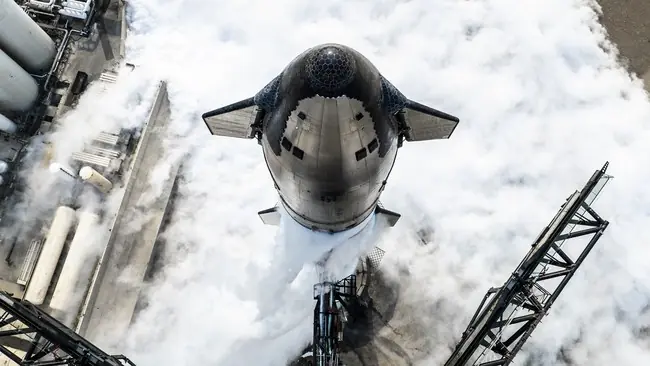
Starship Flight 15 is expected to do more than just change the launch industry; it could potentially change the world. The mission is set to achieve a major milestone by marking the first full recovery of an orbital launch system. This would be a significant breakthrough, as it would demonstrate the reliability and reusability of Starship, which is designed to be the most powerful and versatile rocket ever built.
The Super Heavy Booster, a key component of the Starship system, achieved reusability in May of last year when Booster 14 flew a second time, using 29 out of 33 flight-proven Raptor 2 engines. Booster 15 made its second flight in October 2025. However, the Ship upper stage has not yet achieved reuse, and it has never been caught by the Mechazilla landing platform. This is where the big deal lies: SpaceX hopes to change all that on Friday, November 13.
Assuming regulatory approval and no technical issues, Flight 15 will launch on Friday afternoon. A successful boost phase will send the Ship into an orbital trajectory, and the Ship’s engines will then lift it into LEO. Meanwhile, the Super Heavy Booster will conduct the usual boostback burn and land back at its launchpad for only the fourth time. Once in orbit, the Ship will deploy 26 Version 3 Starlink internet satellites, three of which are equipped with cameras to examine the Ship’s heat tiles.
Starlink and the Future of Internet Connectivity
In terms of increasing Starlink’s throughput, this flight will be worth about 10 Falcon 9 launches. A fully-laden Starship, with a maximum payload of about 60 V3 satellites, will deliver 20 Falcon 9s worth of satellites. If all goes well, the Ship will fly 14 orbits on a planned 22-hour mission and then land back at the launch site, mirroring the Super Heavy Booster’s landing.
“If successful, this will mark the first full recovery of an orbital launch system and a breakthrough moment in making Starship a reliable, rapidly reusable rocket,” said SpaceX in a statement. Once the concept is proven, the rest is just about getting good at it. However, the revolution lies in the potential for Starship to enable orbital data centers at a cost less than terrestrial-based ones, opening up new possibilities for space-based infrastructure.
The Cost of Space Travel
Currently, the recovery and re-flight of a Falcon 9 takes a couple of weeks, but Starship is designed to be capable of re-flight every few hours. SpaceX aims to turn around the largest and most powerful rocket ever built in not much time than a passenger jet. This rapid turnaround capability could revolutionize space travel by making it more accessible and cost-effective.
The cost of launching payloads to LEO with Starship is projected to be significantly lower than with traditional rockets. While the Space Shuttle cost about $54,500 per kilogram to LEO, Starship promises to deliver payloads at a cost of just $67 per kilogram. This dramatic reduction in cost could make space travel and exploration more viable for a wide range of applications, from scientific research to commercial ventures.
Implications for Global Exploration and Commerce
Starship’s potential to enable orbital data centers and other space-based infrastructure could have far-reaching implications for global exploration and commerce. The rocket is not just a vehicle for launching satellites; it is a platform for building and maintaining infrastructure in space. This could lead to the development of space-based industries that are currently unimaginable, such as space-based manufacturing, resource extraction, and even space tourism.
Furthermore, the ability to launch and recover Starship quickly could make space travel more frequent and routine, similar to how air travel has become a common part of modern life. This could lead to the establishment of permanent space habitats and the development of a space-based economy that is as significant as the terrestrial one.
The Future of Space Exploration
The potential of Starship Flight 15 to mark the first full recovery of an orbital launch system is a significant milestone. If successful, this mission could pave the way for a new era of space exploration and utilization. The ability to launch and recover rockets quickly and efficiently could make space travel more accessible and cost-effective, opening up new opportunities for scientific research, commercial ventures, and even human colonization of other planets.
The future of space exploration is no longer just about reaching the stars; it is about building a sustainable and economically viable presence in space. Starship Flight 15 represents a step toward achieving this vision, and its success could be the catalyst for a new era of space exploration and innovation.
Source: PJ Media