20 States Back Church in Supreme Court Religious Liberty Case
Supreme Court to hear case on whether religious land use restrictions violate constitutional rights.
4 min read
In a landmark case that could reshape religious liberty in the United States, 20 states have joined Kentucky in supporting a Catholic religious organization in its fight against local zoning restrictions that blocked the construction of a modest Virgin Mary prayer shrine on its church grounds. The case, which has now reached the U.S. Supreme Court, centers on the Missionaries of Saint John the Baptist, a Catholic nonprofit that owns Our Lady of Lourdes Church in Park Hills, Kentucky. The dispute has drawn national attention as it raises critical questions about the limits of government authority over religious practices on private property.
Historical Context and Legal Background
The controversy began in 2021 when the Park Hills Board of Adjustment approved the necessary permits and zoning variances for the proposed 600-square-foot outdoor prayer grotto. The shrine, modeled after the famous Lourdes grotto in France, was intended to serve as a space for Catholics to pray, meditate, and honor the Virgin Mary. However, two neighboring property owners, Joel and Elizabeth Frederic, challenged the decision, arguing that the project violated local zoning regulations.
The Kenton Circuit Court initially upheld the local board’s approval in 2022, but the Kentucky Court of Appeals reversed that decision in November 2023, ruling that the proposed shrine represented an impermissible expansion of the church’s existing nonconforming land use. The Kentucky Supreme Court later affirmed this decision on December 18, 2025, stating that blocking the shrine did not impose a substantial burden on religious exercise under federal law.
Legal Battle and Religious Liberty Concerns
The Catholic organization argues that local governments should not have the power to determine which aspects of a sincerely held religious practice are important enough to warrant federal protection. This case is being closely watched as it involves the Religious Land Use and Institutionalized Persons Act (RLUIPA), a federal law enacted in 2000 to protect religious institutions from discriminatory and excessively burdensome land-use restrictions.
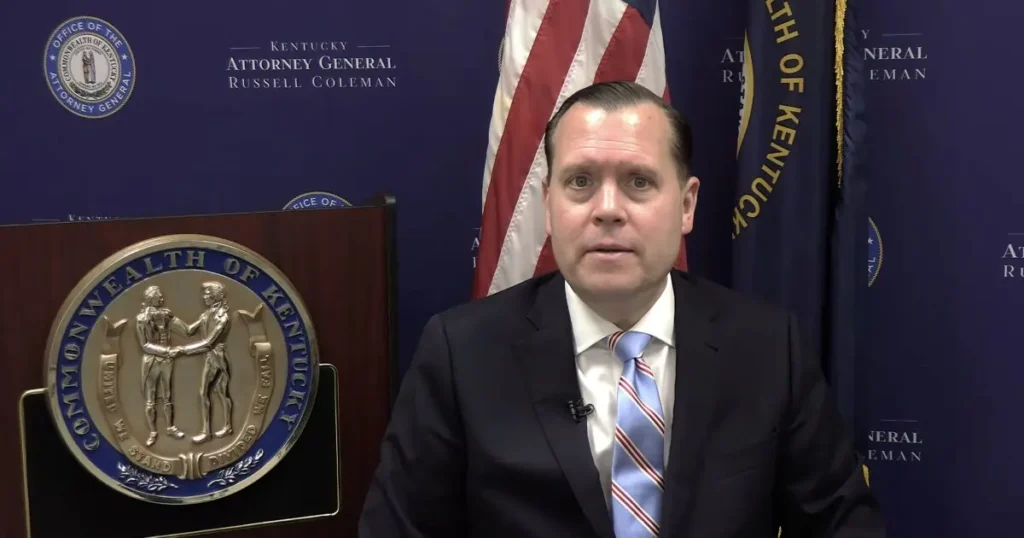
Kentucky Attorney General Russell Coleman has led a multistate coalition urging the Supreme Court to overturn the ruling. Coleman criticized the restrictions on religious exercise, warning that allowing objections from neighbors to override fundamental religious freedoms could set a dangerous precedent. “This fundamental American freedom cannot be brushed away simply by a heckler’s veto, and I’m confident the justices will agree,” Coleman said, according to Heritage Review.
National Support and Political Implications
Kentucky and 19 other states, including Alabama, Arkansas, Florida, Georgia, Idaho, Iowa, Kansas, Louisiana, Mississippi, Missouri, Montana, Nebraska, Oklahoma, Pennsylvania, South Carolina, South Dakota, Tennessee, Utah, and West Virginia, submitted an amicus brief in support of the Missionaries of Saint John the Baptist. Republican Senators Ted Cruz, Chuck Grassley, Kevin Cramer, and Mike Lee also submitted an amicus brief, highlighting the bipartisan nature of the issue.
The case has broader implications for how courts evaluate restrictions on religious land use. If the Supreme Court rules in favor of the church, it could establish a national precedent that limits the power of local governments to restrict religious activities on private property. This could have significant consequences for religious institutions across the country, potentially affecting similar cases in other states.
Precedent and Broader Implications
This is not the first time a religious institution has been forced into a legal battle over local zoning restrictions. In May 2025, The Gateway Pundit reported that President Trump’s Department of Justice filed a federal lawsuit against the city of Troy, Idaho, alleging that local officials violated RLUIPA by denying a permit sought by Christ Church, an evangelical congregation. The Justice Department maintained that local governments cannot use zoning regulations to discriminate against religious organizations.
The Supreme Court agreed to hear the case on October 1, 2026, and oral arguments are scheduled for January 20, 2027. The question facing the justices is not just about one Catholic prayer shrine in northern Kentucky, but about the broader issue of how much power government bureaucrats and courts should have over the religious activities Americans conduct on their own property.
Religious Freedom as a Constitutional Right
Religious freedom is a constitutional right, not a privilege bestowed by the government or subject to the approval of one’s neighbors. The case highlights the tension between individual religious expression and the regulatory authority of local governments. If the Supreme Court rules in favor of the church, it could signal a shift in how the judiciary interprets the balance between religious liberty and zoning regulations.
The decision in this case could have far-reaching implications for religious institutions across the country, potentially affecting similar cases involving religious land use. It also underscores the ongoing debate over the role of government in regulating religious practices and the extent to which individuals can exercise their constitutional rights without facing legal challenges from their neighbors.
Source: The Gateway Pundit