20 Years Later: Marines Recall Ramadi’s Brutality and Sacrifice
A veteran Marine reflects on the 20th anniversary of the Battle of Ramadi, revealing the dangers and sacrifices faced by troops during the Iraq War.
5 min read
Twenty years after the Battle of Ramadi, the echoes of that brutal conflict remain vivid in the minds of those who lived through it. Major Scott Huesing, USMC (Ret.), a retired Marine who served in ten combat deployments across Iraq, Afghanistan, and the Horn of Africa, recently shared his experiences with the podcast Dangerous Laughter to mark the 20th anniversary of the battle. The war in Iraq, particularly the urban warfare in Ramadi, was one of the most punishing and deadly chapters of the conflict, and Huesing’s account offers a rare glimpse into the reality faced by American troops.
The Battle of Ramadi: A City in Chaos
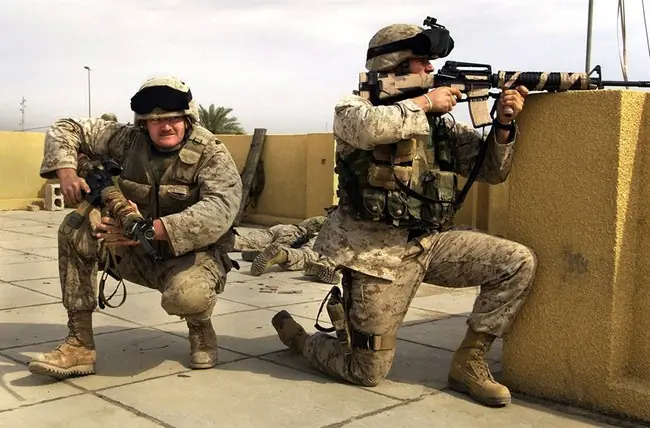
Ramadi was not a distant battlefield where the enemy was easily identified and openly engaged. It was a city of over 300,000 people, where insurgents were deeply embedded within the civilian population. Huesing, who led Echo Company, Second Battalion, Fourth Marines, described how the enemy hid weapons in homes, threatened residents who cooperated with American forces, and turned ordinary streets and buildings into lethal zones. Marines had to fight their way through the city while protecting civilians who were often used as cover by the enemy. This was urban warfare at its most brutal, house by house, room by room.
Huesing recounted how the battle was a daily reality for his men, with firefights that could stretch for hours and contact with the enemy occurring multiple times a day. He emphasized that this was not a scene from a movie, but the grim reality of combat in a city where the danger was always close to home. The streets of Ramadi, he said, looked more like Georgetown in Washington, D.C., making the threat of violence feel all too real for civilians.
The War at Home: Politics and the Front Lines
The timing of the battle made the anniversary especially sobering. In 2006, while the United States was consumed by midterm elections and political debates over the Iraq War, Marines were enduring one of the most dangerous assignments imaginable. At home, Americans were debating the war’s direction and the administration’s decisions, while in Ramadi, the questions were immediate and unforgiving: Where is the enemy? Is that building occupied? Who is covering the next street? How do I get my people through this alive?
Huesing described the intense pressure faced by soldiers and the need to make split-second decisions under fire. He explained that courage in combat is not the absence of fear, but the ability to focus on the mission, your fellow Marines, and the next task in front of you. It is about trust, training, and the unyielding commitment to protect one another in the face of overwhelming odds.
Remembering the Fallen: A Heavy Responsibility
One of the most difficult parts of the conversation came when Huesing discussed the calls he had to make to families whose Marines did not come home. He described the emotional weight of those moments, knowing that behind every casualty was a family whose world had been irrevocably changed. A Marine’s death is not just a battlefield report or a line in a history book—it follows parents, spouses, children, and friends for the rest of their lives. There is no clever line that makes that easier, only the responsibility to remember.
Huesing’s book, Echo in Ramadi: The Firsthand Story of the U.S. Marines in Iraq’s Deadliest City, gives readers a window into the experience of those who fought in the battle. The book is not just about the firefights or military operations, but about the men who endured them, the bonds they formed, and the families who supported them. The dedication of the book honors the Marines of Echo Company who fought and died, along with the families whose unwavering support sustained them. These are not ceremonial words—they are the people behind the history.
Brotherhood and Sacrifice: Beyond the Battlefield
Huesing also spoke about the relationships forged in war, such as that of an Iraqi interpreter known as Big Sam. Sam’s bond with the Marines became something much larger than a wartime partnership. He eventually became an American citizen and went on to serve in the U.S. Navy. His story is a reminder that the relationships formed in war can continue long after the shooting stops, and that the people who stand alongside American service members sometimes make extraordinary sacrifices of their own.
Today, Huesing has carried that commitment into a different mission through Solid Copy Media, helping veterans tell their stories and bring them to readers. It is a fitting next chapter for a man who understands that the history of war is ultimately the history of the people who lived it.
What Did Winning Mean? A Hard Question
During the conversation, Huesing also touched on a harder question: What did winning in Iraq and Afghanistan actually mean? The men on the ground could accomplish their missions, defeat an enemy in a particular fight, and protect the people beside them. But the larger political objectives were often less clear. That tension deserves honest discussion.
Asking what our country hoped to achieve does not diminish the service of those who were sent to achieve it. If anything, it makes our obligation to understand their experience even greater. The 20th anniversary of the Battle of Ramadi is a reminder of the sacrifices made by American troops and the enduring impact of their service on both the battlefield and the home front.
Source: PJ Media