Canary Islands Declare Emergency Amid Over 15,000 Migrants Arrive in November
Spanish Canary Islands declare emergency after over 15,000 illegal migrants arrive, straining resources and prompting urgent EU calls for support.
4 min read
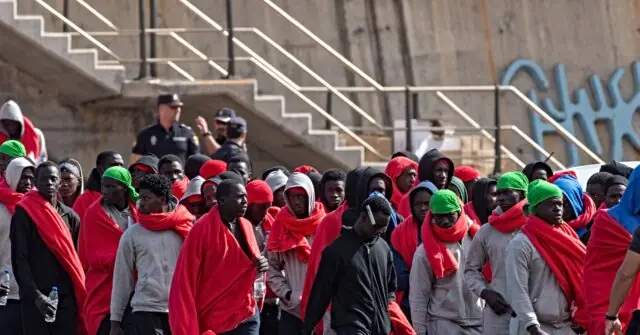
The local government of the Spanish Canary Islands has declared a state of sanitary, social, and security emergency following the arrival of over 15,000 illegal migrants in November. The crisis has placed immense pressure on the region, particularly on the smaller island of El Hierro, which has a population of just 12,000. The influx of migrants, predominantly from Africa, has overwhelmed the islands’ resources and infrastructure, prompting urgent calls for federal and European Union support.
A Surge in Migrant Arrivals
The crisis reached a critical point on November 24, when over 2,100 migrants arrived by sea, marking the highest single-day figure in the region’s history. By November 25, an additional 400 migrants reportedly arrived, bringing the total for the month to over 15,000. These numbers far exceed the population of El Hierro, highlighting the severity of the situation.
The Canary Islands, a popular Atlantic tourist destination, have seen a dramatic increase in migrant arrivals, with the crisis breaking over 30-year-old records. The arrival of these migrants has created a humanitarian and logistical challenge, with local authorities struggling to provide adequate support and services.
Emergency Declaration and Response
In response to the escalating crisis, the autonomous government of the Canary Islands activated its PLATECA civil protection territorial emergency plan. The declaration of a state of emergency was made by Manuel Miranda, the regional minister for Territorial Policy, Territorial Cohesion, and Water Resources. According to the government’s statement, the situation requires the reinforcement of health, social, and security measures, as well as additional services to assist the local population.
President of the Canary Islands, Fernando Clavijo, emphasized the unprecedented nature of the migration pressure, stating that the islands “can take no more.” Clavijo criticized the current administration for failing to address the crisis effectively, particularly highlighting the Prime Minister Pedro Sánchez’s claim that immigration was under control, which he argued did not reflect the reality faced by the local population.
Call for EU and Military Support
Clavijo has called for an urgent meeting with European Commission President Ursula von der Leyen, demanding an immediate response from the EU. He stressed that the responsibility of addressing such a large-scale crisis should not fall solely on the Canary Islands, emphasizing the need for collective action.
Furthermore, Clavijo requested the deployment of the Spanish Armed Forces’ Military Emergencies Unit (UME) to the Canaries to help manage the situation. The Ministry of Defense accepted the request, and UME troops are expected to arrive in the region by Thursday, November 26.
Political and Legal Context
Prime Minister Pedro Sánchez has been working with Senegal and The Gambia to address the situation, expressing confidence that the number of arrivals can be reduced in the coming days. However, Clavijo has criticized Sánchez for his public statements, arguing that they do not align with the reality of the crisis.
The Canary Islands’ government has opted for a “Level 2” emergency declaration, which allows local authorities to manage the crisis while seeking additional resources from the central government. A “Level 3” declaration would place the central government in charge, which Clavijo’s administration has explicitly ruled out under any circumstances.
Impact on Local Infrastructure and Services
The influx of migrants has significantly strained the resources and infrastructure of El Hierro and the other Canary Islands. The local government has been working to provide basic necessities, including shelter, food, and medical care, but the scale of the crisis has made it increasingly difficult to meet the needs of the arriving migrants.
Local authorities have also faced challenges in managing the security situation, with the need to ensure the safety of both the migrants and the local population. The use of shanty boats, known as Cayucos, has been a primary method of arrival, further complicating the response efforts.
Broader Implications and Future Outlook
The crisis in the Canary Islands has broader implications for Spain and the European Union, raising questions about the effectiveness of current immigration policies and the need for a coordinated regional response. The situation has also highlighted the vulnerabilities of the Canary Islands, which are strategically located and have long been a point of entry for migrants seeking to reach Europe.
As the crisis continues to unfold, the Canary Islands government remains focused on managing the immediate challenges while advocating for greater support from both national and international authorities. The situation underscores the complex and multifaceted nature of migration issues and the need for a comprehensive and collaborative approach to address them.
Source: Breitbart