Iran Demands U.S. Surrender to Seven Conditions for Peace Talks
Iranian officials demand U.S. unconditional concessions to begin peace negotiations, citing recent political shifts and military posturing.
2 min read
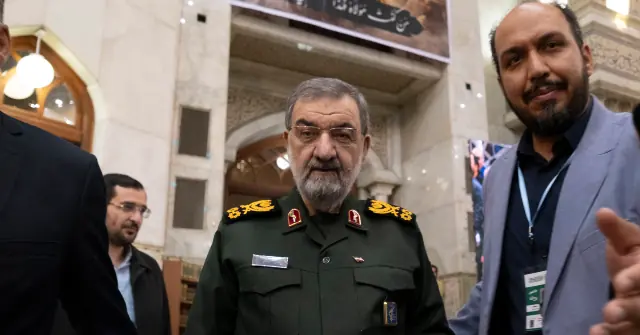
Iranian officials, including Supreme National Security Council Secretary General Mohsen Rezaei, have demanded that the United States unconditionally surrender to Iran’s seven key demands before any peace talks can commence. Rezaei, a hardliner within the Islamic Revolutionary Guard Corps (IRGC), criticized the U.S. government for its perceived failures and called for immediate capitulation to Iran’s terms.
Iran’s Seven Demands and U.S. Response
Rezaei’s recent social media post emphasized that the U.S. must meet Iran’s seven conditions, which include all the terms from the June Memorandum of Understanding (MOU) that previously halted hostilities, along with major additional concessions such as U.S. paying war reparations to Iran. In return, Iran has offered only a vague promise to begin peace negotiations.
Rezaei’s rhetoric was fueled by recent U.S. statements from former President Donald Trump, who claimed Iran’s military was “effectively over,” and Secretary of War Pete Hegseth, who described Iran as “devastated” and “in the weakest position it’s been in a very, very long time.” These comments were met with Iranian defiance, as officials refused to acknowledge any progress in peace talks.
Political Shifts and Military Posturing
Iranian officials have also cited the Democratic victory in the U.S. midterm elections as a major victory for their cause, which they see as a sign of U.S. weakness. Rezaei’s social media posts reflected this sentiment, gloating over the political shifts and the perceived decline of the U.S. military and political leadership.
Rezaei, who was appointed to the top position in the Supreme National Security Council in August 2026, has long been a vocal opponent of U.S.-Iran peace deals. His aggressive stance is rooted in past military conflicts, including the Iran-Iraq War, where his strategies led to a significant loss of Iranian lives. He continues to advocate for a hardline approach, vowing to attack U.S. military and commercial vessels in the Strait of Hormuz until Iran’s demands are met.
International Mediation and Diplomatic Efforts
Despite Iran’s demands, U.S. and Iranian officials have engaged in diplomatic efforts through intermediaries such as Qatar. Qatari Foreign Ministry officials reported receiving “positive responses” from both Washington and Tehran to their latest mediation efforts. However, Iranian officials have denied any progress toward limited peace goals, such as the rumored proposal for Iran to reopen the Strait of Hormuz to commercial shipping in exchange for the U.S. releasing $8 billion in frozen assets.
As the situation continues to escalate, the international community watches closely, with tensions between the U.S. and Iran reaching a critical point.
Source: Breitbart