Iraq Seizes Kurdish Oil Assets Amid Smuggling Crackdown
Iraqi government moves to reclaim oil fields and border crossings from Kurdish authorities amid smuggling allegations.
2 min read
On November 24, Iraqi Prime Minister Ali al-Zaidi ordered federal authorities to take over the Kurdistan Region’s border crossings and oilfields under Kurdish security control, citing rampant oil smuggling. Within 24 hours, Iraq’s Federal Supreme Court ruled that Baghdad may deploy federal troops along the region’s international borders, marking a significant escalation in the central government’s efforts to assert control over critical resources.
Smuggling Allegations and Legal Pushback
The court’s November 25 ruling held that securing Iraq’s borders is an exclusive federal power under Articles 109 and 110 of the constitution, asserting that Kurdish authorities have no jurisdiction beyond the areas they administered in March 2003. Two judges dissented, arguing that the Oil Ministry should oversee and audit oil and gas fields, with production and exports managed jointly with regional governments.
On November 26, federal authorities closed two KRG-run crossings, one with Syria and one with Iran, signaling the government’s resolve to tighten control over the region’s oil exports. The orders also barred the Kurdistan Regional Government (KRG) from approving exports of crude or petroleum products except through the federal Oil Ministry, and required the Border Ports Authority to take over all official crossings in the region, which borders Turkey, Iran, and Syria.
Kurdish Reactions and Protests
Kurdistan Region Prime Minister Masrour Barzani called Baghdad’s orders “in no way acceptable,” while KDP leader Masoud Barzani labeled the decision “unsound and reckless.” The KDP and the Patriotic Union of Kurdistan (PUK), rivals unable to form a cabinet since the October 2024 elections, issued a joint statement warning that any infringement on the region’s federal status is a red line. The KRG rejected the “military language and threats” in a statement by Iraq’s military spokesman and called for an end to oil smuggling across the country.
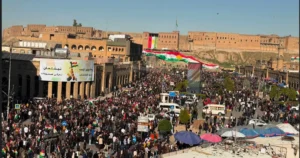
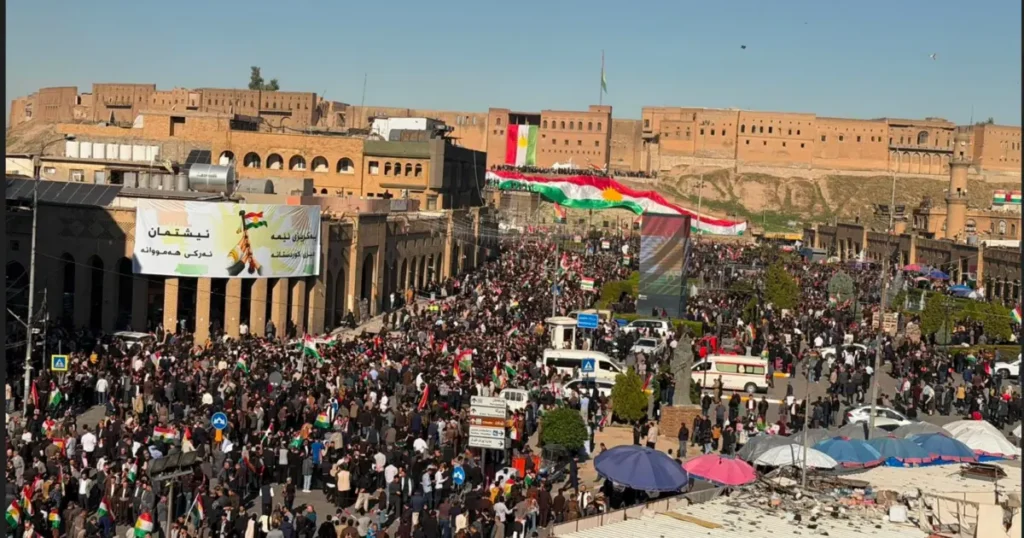
Thousands protested in Erbil and Duhok on November 26, highlighting the deepening tensions between Baghdad and the Kurdish leadership. Meanwhile, the government’s claims of $100 billion in lost revenue from smuggling have drawn scrutiny, as the figures make little distinction between smuggling and the region’s independent oil sales, which became the KRG’s main revenue source after Baghdad cut its budget share in 2014.
Iran-Backed Militia Withdrawal
The standoff with the Iran-backed militia Kata’ib Hezbollah produced an agreement for a phased withdrawal after talks with Esmail Qaani, commander of Iran’s Quds Force. Kata’ib Hezbollah denied the smuggling charges and called them part of a campaign to strip it of its weapons. Reports differ on how far the withdrawal has progressed, with some suggesting the militia has left about 70 percent of the territory it held.
Source: The Gateway Pundit