Mexico Files Complaint Over DEA Tip Line, Journalist Already Used It
Mexico’s President files complaint against DEA’s tip line, while journalist used it to report on cartel ties.
6 min read
On Thanksgiving Day, Juan Manuel Partida, a journalist from Sinaloa, sent a WhatsApp message to the U.S. Drug Enforcement Administration (DEA), sharing information about potential ties between politicians and criminal groups in his state. He received a reply within minutes, raising questions about the effectiveness and implications of the DEA’s new tip line.
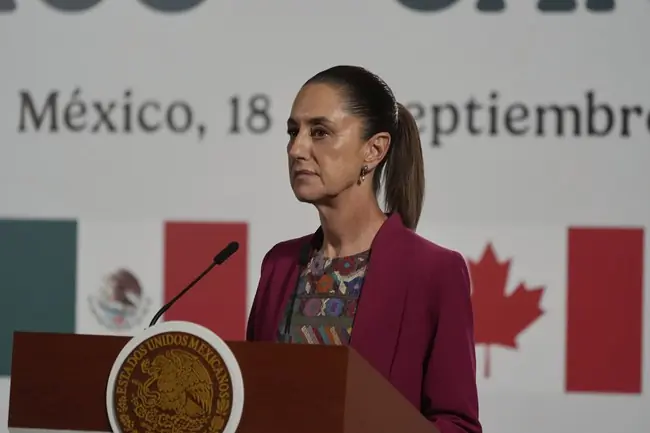
On Friday, Mexican President Claudia Sheinbaum escalated her dispute with the United States over the DEA’s tip line, filing a formal complaint with the U.S. Embassy, accusing Washington of interfering in Mexico’s internal affairs. Sheinbaum emphasized that the relationship between the two nations should be one of coordination, not subordination.
“We have made it very clear in our relationship with the United States that the relationship is one of coordination, not subordination,” Sheinbaum said in her morning press briefing. She urged Washington to address drug use and combat drug traffickers within its own territory while affirming that Mexico would continue working to confront cartels and prevent drugs from reaching the U.S.
DEA Administrator Terry Cole announced the Sinaloa tip line on November 25, inviting people to share information about suspected cartel members, officials who help them, and networks that launder their money. Cole also mentioned plans for a line in Jalisco.
Sheinbaum stated that Mexico already has agencies that take tips and share information with the United States, calling the DEA’s move an act of interference. The U.S. ambassador agreed to review the complaint.
Partida, who heads the Sinaloa Journalists Association, said he contacted the DEA because he was frustrated with violence and suspected corruption in his home state. His account highlights the actions of one individual who believed his information would be better heard by a foreign agency. However, any allegations he sent still require evidence, and his case raises questions about why someone in Sinaloa would think a foreign agency would be more receptive.
Partida Valdez cited this case as a key reason he reached out to the tip line, stating it was a “very clear example of what we’re suffering because of these governments that do absolutely nothing but protect criminals.” He added, “This whole song and dance about sovereignty is just collusion with the politicians tied to drug trafficking who are being protected in our country.”
While some observers warned of the dangers of the DEA’s strategy, others, including academics and politicians, praised the tip line as a potential tool or expressed trust in the intelligence agency over their own government. Just days earlier, the two countries demonstrated their ability to cooperate when Mexican forces captured wanted cartel figure Fausto Isidro Meza Flores, known as El Chapo Isidro, with help from U.S. intelligence. On November 21, Cole publicly credited the Mexican authorities who carried out the operation.
The tip line raises a critical question: Who gets to hear from a witness first? Alleged links between elected officials and organized crime have become a significant issue for Sheinbaum’s government, which has rejected what it describes as attempts by U.S. authorities to interfere in Mexican affairs.
“We have made it very clear that our relationship with the United States is one of coordination, not subordination,” Sheinbaum reiterated. The complaint comes despite a significant expansion of security cooperation between the two nations under Sheinbaum. Her government has stepped up efforts against organized crime and fentanyl trafficking amid pressure from U.S. President Donald Trump, who has repeatedly threatened unilateral action against Mexican cartels if Mexico didn’t do more.
Sheinbaum also emphasized that the United States has work to do on its side of the border, from tackling drug consumption to pursuing people who distribute drugs and launder money. She is correct in that responsibility; Washington should be able to say what it’s doing about the American end of the business, especially when it’s asking people in another country to come forward.
Mexico has every reason to insist on control of arrests and searches on its territory. Receiving a tip raises a different set of questions. If a tip implicates a public official, who gets to see the name of the person who sent it? Can investigators check the allegation without exposing the source?
The DEA should explain who handles those decisions before more people put their safety in its hands. There is also a disagreement inside Mexico. Opposition Sen. Lilly Téllez of Sonora welcomed the line as a way for the two countries to cooperate against cartels. Her endorsement and Sheinbaum’s objection raised questions for Mexican officials as much as American ones.
Where should someone go with a tip when the allegation concerns the people who might ordinarily receive it? If Mexico wants people like Partida to use its reporting channels, it needs to show them that a complaint can get a fair hearing even when it concerns someone in office. The DEA will have to show that it can follow up on tips without exposing the people who supply them. Partida says he got an answer in minutes. What happens to his information after that is the part worth watching.
That goes for Jalisco too. Before a second line opens, both governments have a chance to settle who can handle leads that cross the border and how they’ll keep sensitive reports from reaching the people named in them.
Those are practical questions the public can ask without demanding the details of any investigation.
Context and Recent Developments
Sheinbaum’s government has been under pressure to address organized crime and fentanyl trafficking, with Trump’s threats of unilateral action serving as a catalyst. Despite this, the DEA’s tip line has sparked a diplomatic dispute. Sheinbaum’s complaint highlights the tension over sovereignty and the role of foreign agencies in domestic affairs.
The DEA’s initiative aims to gather intelligence from the public, but it has raised concerns about privacy and the handling of sensitive information. The case of Partida illustrates the potential for such lines to be used by journalists and citizens to report on corruption and criminal activity. However, it also raises questions about the effectiveness and transparency of the DEA’s processes.
Meanwhile, the collaboration between Mexican and U.S. authorities in capturing El Chapo Isidro demonstrates the potential for cooperation when it comes to combating drug trafficking. However, the DEA’s tip line has introduced a new layer of complexity, with both governments needing to establish clear protocols for handling cross-border tips and ensuring the protection of sources.
Implications and Future Steps
The situation underscores the broader challenges of transnational crime and the need for coordinated efforts between nations. While the DEA’s tip line could be a valuable tool in gathering intelligence, its implementation must be carefully managed to avoid diplomatic tensions and ensure the protection of sources. Mexico’s insistence on control over its own investigations highlights the importance of sovereignty in such matters.
As the situation unfolds, both governments will need to clarify their roles and responsibilities in handling tips and allegations involving public officials. The case of Partida serves as a reminder of the importance of transparency and accountability in addressing corruption and organized crime, while also highlighting the complexities of international cooperation in such efforts.
Source: PJ Media