Nidal Hasan Seeks Execution Delay, Claims Racial Bias
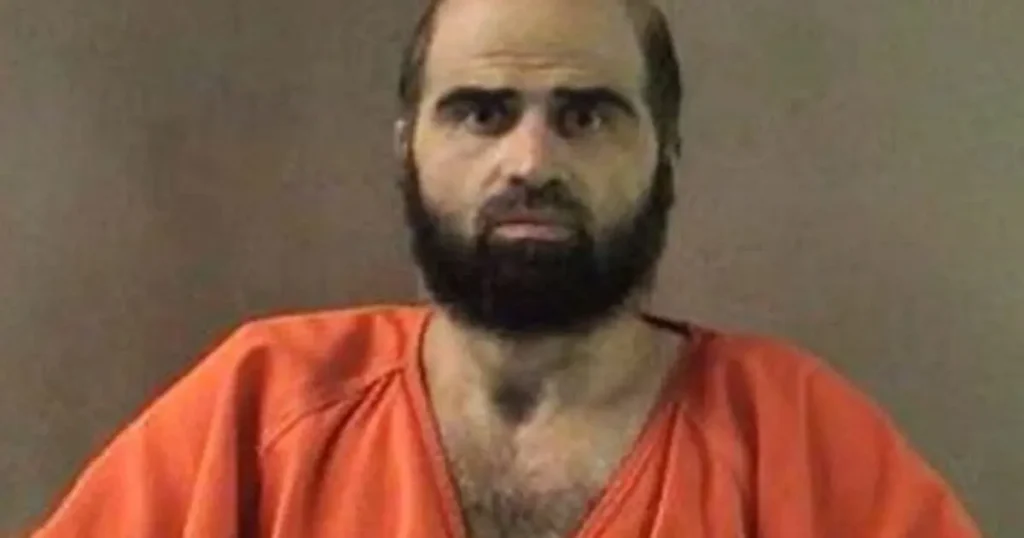
Convicted Fort Hood killer Nidal Hasan seeks execution delay, alleging racial and religious bias from Trump and Hegseth.
2 min read
Convicted Fort Hood terrorist Nidal Hasan has filed a motion in federal court in Kansas seeking a stay of execution to submit a habeas petition, according to court records. The motion claims that his death sentence is being carried out due to unlawful racial and religious animus by former President Donald Trump and Secretary of Defense Pete Hegseth.
Hasan’s Legal Challenge
Hasan, the Army psychiatrist who opened fire on Fort Hood in 2009, killing 13 and wounding 32, is set to be executed by a U.S. Army firing squad at Fort Hood, Texas, on December 3rd, 2026. The execution is scheduled within the 150-day window following President Trump’s approval, as required by Army policy.
In his filing, Hasan argues that the military court’s judgment and his death sentence were obtained in violation of his constitutional rights, citing unlawful command influence from Trump and Hegseth. He claims the decision to execute him was driven by “unlawful racial and religious animus,” a charge that has been denied by the Pentagon.
Legal Proceedings and Judge
The case has been assigned to Judge Tony Mattivi, a Trump appointee, who will oversee the legal proceedings. Hasan’s petition argues that his rights were violated due to the influence of Trump and Hegseth, whose actions he claims were motivated by prejudice.
Hasan’s execution would mark the first military execution in the United States since 1961, underscoring the gravity of the case. His legal team has not yet provided further details on the specific arguments in the habeas petition, but the allegations of racial and religious bias have sparked legal and political debate.
Historical Context
The 2009 Fort Hood attack remains one of the deadliest attacks on a U.S. military base in recent history. Hasan, who was serving as a psychiatrist at the time, was found guilty of premeditated murder and sentenced to death in 2013. His case has been a focal point for discussions about military justice, racial bias, and the role of high-profile political figures in the legal process.
As the execution date approaches, Hasan’s legal challenge continues to draw attention to the intersection of law, politics, and the military justice system in the United States.
Source: The Gateway Pundit