Ninth Circuit Overturns Judge’s Order on Portland Officer Uniforms
Federal judge’s attempt to regulate Portland officers’ uniforms rejected by Ninth Circuit in landmark ruling.
4 min read
In a significant legal development, the Ninth Circuit Court of Appeals overturned a judge’s attempt to mandate changes to the uniforms and equipment of federal officers in Portland, Oregon. The ruling, issued in the case Dickinson v. Trump, centered on a dispute over alleged misconduct by federal officers and the extent of judicial authority to oversee law enforcement practices.
The Case and the Judge’s Order
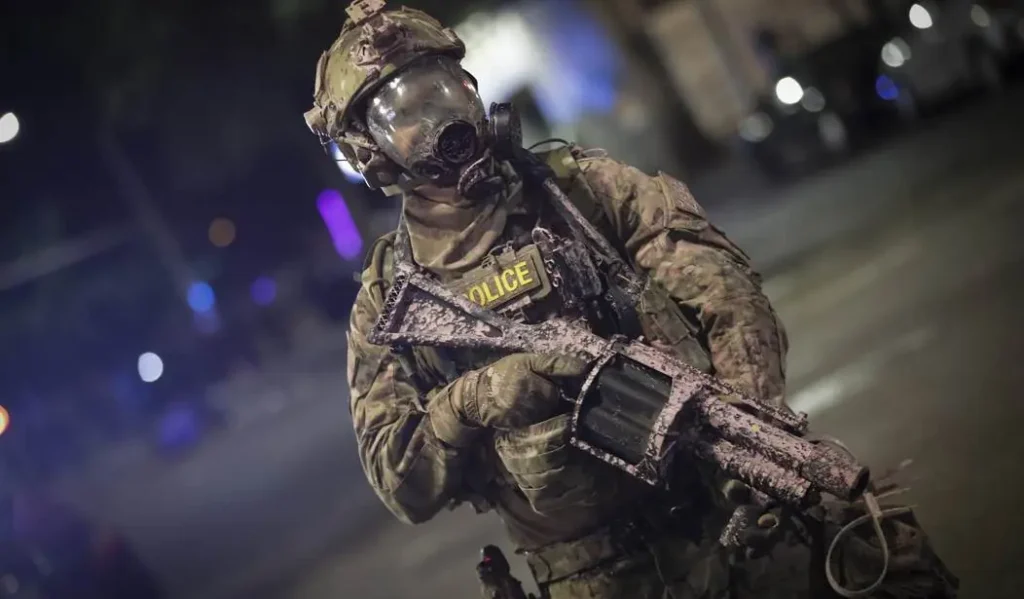
Michael Simon, a federal judge in Portland, sought to impose more visible identifying markings on federal officers, arguing that such measures would enhance transparency and accountability. He ordered the parties to discuss potential changes to uniforms, vests, or helmets and reserved the power to enforce a solution if an agreement could not be reached. The dispute stemmed from allegations that federal officers had used crowd-control weapons against protesters and journalists, raising concerns about potential retaliation.
In March 2023, Simon issued an order restricting the use of chemical and projectile munitions to situations where the specific target posed an imminent threat of physical harm. The order also imposed additional restrictions on pepper spray and dispersal procedures. However, the Ninth Circuit later vacated Simon’s preliminary injunction and provisional class certification, ruling that the restrictions were overbroad and beyond the court’s authority.
Appeal and Legal Arguments
The Trump administration, represented by the Department of Justice, successfully appealed the lower court’s decision. The appellate majority found that the use of nonlethal force to clear crowds and restore order is permitted under existing legal standards without requiring an imminent threat of harm. The court also determined that there was insufficient evidence to support the claim of a retaliatory policy by federal officers.
Judges have broad authority to issue injunctions, but such power comes with significant responsibilities. The court emphasized that an injunction must be supported by evidence and that a judicial remedy must have a lawful basis. The majority argued that personal confidence in a different enforcement policy could not justify an injunction that might interfere with lawful government operations.
Justice and Accountability
The ruling highlighted the delicate balance between judicial oversight and executive authority. Federal officers require clear guidelines to enforce the law effectively, and overly restrictive measures could inadvertently expose both officers and the public to additional risks. The court noted that judges must consider these consequences before imposing conditions that could be enforced through contempt proceedings.
The uniform provision in Simon’s order was particularly contentious. While identifying officers can serve as a tool for accountability, the court ruled that the power to prescribe new markings in a particular lawsuit is a separate legal question. A useful policy idea does not automatically become an available judicial remedy. The court stressed that judicial remedies should be grounded in proven violations rather than broad supervisory authority.
Dissent and Legal Implications
Justice Ana de Alba, in her dissent, agreed that three provisions were overbroad but disagreed with the majority’s rejection of the remaining restrictions. She would have preserved the requirement that officers could not fire munitions at a person’s head, neck, or torso without justification for deadly force. De Alba also defended the class certification, arguing that the plaintiffs’ claims warranted a broader legal examination.
Peaceful individuals who are injured while exercising their constitutional rights should have access to the courts, the court acknowledged. However, judges do not have unrestricted authority to dictate the terms on which executive agencies operate. The court emphasized that judicial orders must be clear and grounded in law to ensure that officers understand their obligations before any confrontation occurs.
Broader Implications for Judicial Review
The Ninth Circuit’s decision underscores the importance of judicial restraint and the need for careful scrutiny of executive actions. The ruling serves as a reminder that while the judiciary has a duty to restrain unconstitutional conduct, it must do so with a clear explanation of how the conduct violates the law and why the chosen remedy is appropriate.
As the legal landscape continues to evolve, the balance between judicial oversight and executive authority remains a critical issue. The decision in Dickinson v. Trump reinforces the principle that every branch of government must operate within its delegated authority and that the Constitution provides a framework for accountability and checks on power.
Conclusion and Future Considerations
The Ninth Circuit’s reversal of Judge Simon’s order marks a significant moment in the ongoing debate over the role of the judiciary in regulating law enforcement. The ruling reaffirms the constitutional principle that officials reviewing the power of others must be held accountable for their own actions. As the legal system continues to grapple with issues of accountability, transparency, and constitutional limits, the balance between judicial oversight and executive authority will remain a central concern.
Source: PJ Media