Supreme Court Reinforces Presidential Authority Over Executive Branch
Supreme Court decision in Trump v. Slaughter reshapes executive power and accountability in the U.S. government.
2 min read
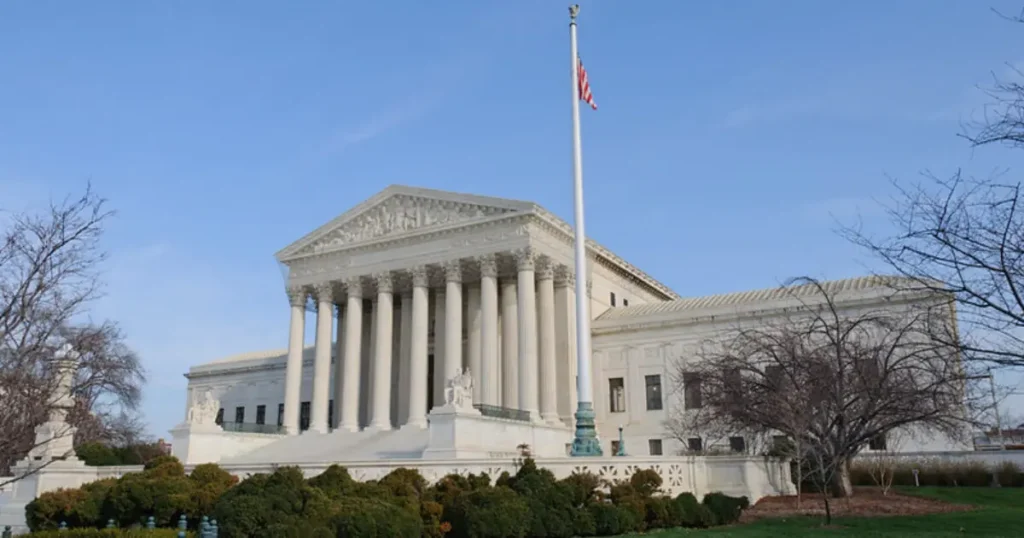
The Supreme Court’s June 29, 2026 decision in Trump v. Slaughter has reasserted the principle of presidential control over the executive branch, reinforcing the constitutional design that vests executive power in a single president. The ruling overturned a long-standing precedent, Humphrey’s Executor v. United States, which had allowed certain independent agencies, like the Federal Trade Commission (FTC), to operate with limited presidential oversight. The Court held that statutory restrictions limiting the President’s removal of FTC commissioners violated the separation of powers, emphasizing that power and accountability must coexist.
A Constitutional Principle Reaffirmed
The decision reaffirms the unitary executive principle, a foundational concept of the U.S. Constitution that ensures the President remains accountable for the execution of laws. The Framers of the Constitution intentionally designed the executive branch to be centralized, allowing the President to act with energy and responsibility, rather than distributing power among multiple officials. This principle, often overshadowed in modern debates over the administrative state, was central to the Court’s reasoning in the case.
The Court argued that the FTC, now wielding substantial rulemaking, enforcement, and adjudicatory authority, exercises executive power akin to that of the President. The previous arrangement, which allowed the President to be held accountable for an agency’s conduct without meaningful authority over its officials, was deemed constitutionally flawed. The ruling restores the necessary connection between authority and accountability, ensuring that the President can direct and remove officials responsible for executing laws.
Historical Context and Legal Evolution
The principle of presidential supervision over executive officials has deep historical roots. James Madison, in the early days of the republic, argued that the President must have removal authority to ensure responsibility flowed from subordinate officials through the chief executive to the people. This understanding was later codified in the Myers v. United States decision, which gave judicial force to the idea of presidential oversight. However, Humphrey’s Executor carved out an exception for certain independent commissions, an exception now removed by the Trump v. Slaughter decision.
The Court’s decision does not eliminate Congress’s authority to organize the government. Rather, it clarifies when statutory safeguards become barriers to presidential accountability. The ruling is a significant shift in the law of the administrative state, with its full implications yet to be determined as courts apply its reasoning to other agencies.
Balance of Power and Democratic Accountability
While the decision strengthens presidential oversight, it also raises concerns about concentrating substantial authority in a single elected official. The Court emphasized that proper safeguards include lawful limits, congressional oversight, judicial review, transparent procedures, and ultimately, the electorate. The unitary executive is not a license for unlimited power, but a mechanism to ensure responsibility when the government acts.
The ruling underscores the constitutional principle that executive power must be exercised by officials accountable to the President, who in turn is accountable to the people. This balance of power remains a cornerstone of American governance, ensuring that no official operates beyond the reach of constitutional accountability.
Source: The Gateway Pundit