Two Iranians Convicted of Spying for Iran in UK
Two Iranian nationals convicted of spying for Tehran in the UK, raising security concerns over open borders.
2 min read
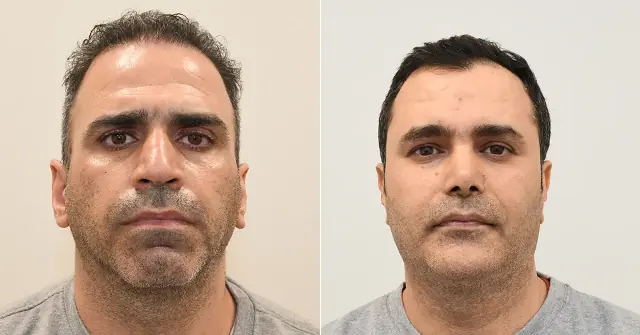
Two Iranian nationals have been convicted of spying for Tehran in the UK, highlighting the growing security concerns over the country’s open southern border. Mostafa Sepahvand, 41, and Farhad Javadi Manesh, 46, were found guilty of working on behalf of Iranian intelligence and planning an attack in Britain under the National Security Act 2023.
Convictions and Surveillance Activities
The men, who arrived in the UK as asylum seekers, were arrested during daylight raids in London. Sepahvand, who entered the UK in 2016 via a lorry, and Manesh, who arrived in 2019 on a migrant boat, were found guilty of conducting surveillance on journalists associated with Iran International, a London-based news organization critical of the Iranian regime.
The court heard that the surveillance was being reported back to Iran and that the men were preparing for attacks. Sepahvand was found to be planning a “violent attack” and had told his handler in Iran he would “finish off” a target in exchange for £150,000. He also sought to have his criminal record erased in return for his spying work.
Reactions and Security Concerns
Nigel Farage, the leader of Reform UK, reiterated his warnings about the national security threat posed by the UK’s open southern border. He criticized the government for not adequately vetting asylum seekers, despite both men having been accepted as legitimate asylum seekers.
Farage claimed that Iranian agents have been crossing the English Channel in small boats, calling it a “national security threat.” He cited a source within the Iranian-Persian diaspora who alleged that Iranian operatives had already crossed the Channel in recent weeks.
Legal and Political Implications
The head of the Criminal Prosecution Service stated that the operation was a calculated effort to spy on critics of the Iranian regime. Sepahvand, however, attempted to argue that he was not a volunteer for Iranian intelligence but was working out of fear of retaliation. He also claimed he was incapable of planning an attack, stating he would “not harm an animal, let alone a human.”
Manesh, on the other hand, claimed he only photographed the Iran International offices because it was “a beautiful building.” Both men were described as “proxies” for Tehran, willing to carry out orders in exchange for personal gain.
Broader Context of Border Security
The case underscores the broader issue of border security and the risks associated with an open southern border. While some attempts by Iranian agents to infiltrate the UK have been blocked, over 30,000 Iranians have successfully entered the country through the English Channel illegally. The exact number of successful intelligence operations remains unclear, but the incident highlights the ongoing concerns about the UK’s immigration policies.
Source: Breitbart