Your Gut Bacteria Know Time — Can You?
New research shows gut bacteria follow daily rhythms, affecting metabolism, blood sugar, and weight. Learn how meal timing shapes your health.
6 min read
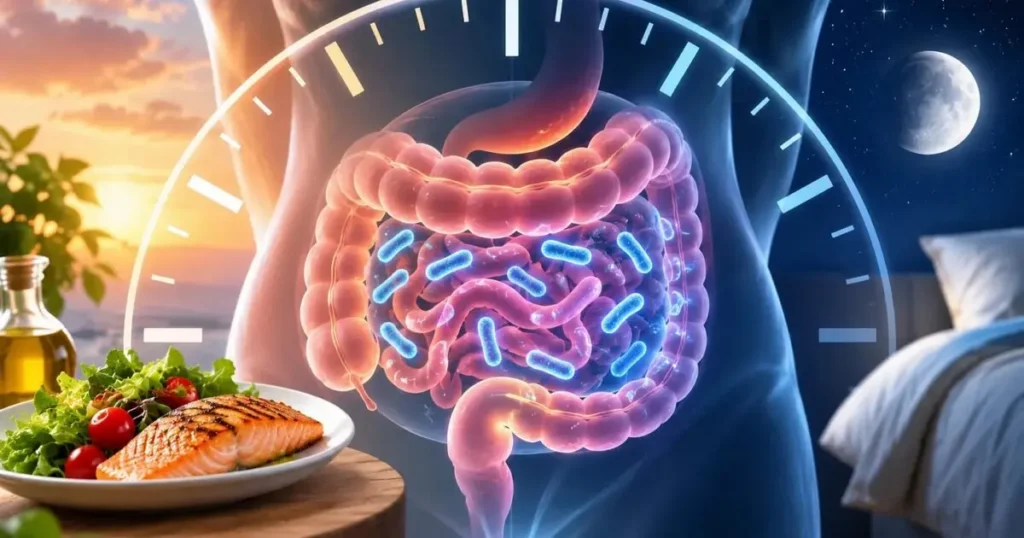
Scientists have long known that the body’s internal clocks influence metabolism and overall health. But a new wave of research reveals that the trillions of bacteria living in our gut also follow their own daily rhythms, and these patterns can significantly impact everything from blood sugar regulation to weight management.
The Punctual Rats of the 1920s
The concept of meal timing and its effects on the body dates back nearly a century. In the 1920s, psychologist Curt Richter conducted a series of experiments with rats that revealed a fascinating phenomenon: when fed at the same time each day, the animals began to display signs of restlessness and anticipation hours before their meal arrived. Even under constant lighting conditions—where there was no natural day-night cycle—the rats still exhibited a clear sense of when their food would come.
Richter called this behavior “food anticipation.” His work laid the foundation for understanding how regular eating schedules can synchronize the body’s biological rhythms, even in the absence of external light cues. This discovery was crucial in establishing that the body’s internal clock is not solely dependent on sunlight but can also be influenced by the timing of food intake.
Gut Bacteria: More Than Just Digestive Help
While Richter’s research focused on the body’s internal clock, modern science has expanded this understanding to include the gut microbiome. The human gut is home to trillions of bacteria that play a critical role in digestion, immune function, and even mental health. But what many people don’t realize is that these bacteria also have their own internal rhythms, which can be synchronized with the body’s natural day-night cycle.
Research has shown that the gut microbiome undergoes daily changes in both mice and humans. Certain bacteria become more active at specific times, producing chemicals that influence digestion, metabolism, and even inflammation. These bacterial activities are not random; they follow a predictable pattern that aligns with the body’s circadian rhythm.
The Role of Meal Timing in Shaping Gut Rhythms
One of the major signals that help organize these rhythms is the regular cycle of eating and fasting. When meals are consumed at predictable times, bacterial activities follow a consistent pattern. However, when eating schedules become irregular or shift into hours typically reserved for sleep, these bacterial rhythms can become disrupted or less pronounced.
A 2014 study demonstrated that the gut microbiome undergoes daily fluctuations in both mice and humans. The relative abundance of certain bacteria changed over approximately 24 hours, as did the chemical activities they produced. For instance, when mice were fed a normal diet and maintained on a regular feeding schedule, their gut bacteria displayed distinct daily rhythms. However, when food was available on an unrestricted basis—such as a high-fat diet with no time limits on eating—many of these bacterial rhythms weakened.
Interestingly, when researchers reintroduced a consistent daily feeding window, much of the bacterial rhythmicity returned. The mice also showed improved metabolic outcomes, including protection against excessive weight gain, fatty liver, and impaired blood-sugar regulation. This suggests that the timing of food intake can have a profound effect on how the gut microbiome functions, even when the type of food remains the same.
The Link Between Gut Bacteria and Metabolic Health
Short-chain fatty acids, such as acetate, propionate, and butyrate, are produced when gut bacteria ferment dietary fiber. These compounds play a key role in regulating inflammation, intestinal health, and glucose metabolism. However, the production and availability of these chemicals can vary throughout the day, depending on the activity of the gut microbiome.
When the gut microbiome loses its normal daily rhythm, the timing and amounts of these chemical signals can change. This disruption may have significant consequences for how the body handles blood sugar. In a 2014 study, researchers disrupted the light-dark schedules of mice to simulate jet lag. The rodents developed changes in their gut bacteria along with impaired glucose tolerance, meaning their bodies had more difficulty clearing sugar from the bloodstream.
Further experiments revealed that transferring gut bacteria from jet-lagged mice into germ-free mice also resulted in impaired glucose tolerance. This suggests that the disrupted microbiome may not just be a byproduct of metabolic issues but could actually contribute to them. While these findings are based on animal studies, they highlight the potential role of gut bacteria in metabolic health.
Implications for Human Health
Other studies have found that repeatedly eating at biologically inappropriate times—such as late at night or after disrupted sleep—can interfere with normal glucose regulation. This supports the idea that the body’s internal systems not only respond to food after it is consumed but also anticipate regular periods of eating and fasting.
Although the microbiome is just one part of the equation, it plays a crucial role in coordinating these internal rhythms. The liver, pancreas, muscles, and other organs also have their own biological clocks, and misaligned schedules can affect them directly. However, the emerging picture is clear: the body doesn’t simply react to food after it is swallowed. Its internal systems also anticipate regular eating and fasting periods.
Putting Research into Practice
While the research may not require an elaborate diet, it does suggest that maintaining regular mealtimes can help synchronize gut bacteria with the body’s internal clocks. Eating at roughly the same times each day, preferably during daylight hours, and avoiding late-night snacking can support this synchronization.
Regular mealtimes help ensure that the chemicals produced by gut bacteria arrive when the body is better prepared to use them. Additionally, leaving a longer break between dinner and breakfast allows insulin levels to fall and enables the body to shift from storing energy as fat or glycogen toward mobilizing stored energy, i.e., burning fat. These rhythms collectively contribute to improved metabolic health.
For example, finishing dinner at 7 p.m. and eating breakfast at 7 a.m. creates a natural 12-hour overnight fast without skipping a single meal. Delaying breakfast until 12 noon extends the fast by an additional five hours, giving the body more time to reset its metabolic processes.
What This Means for the Future of Health
The growing body of research on gut bacteria and meal timing underscores the importance of aligning our eating habits with our body’s natural rhythms. While more studies are needed to fully understand the implications for human health, the evidence so far suggests that the timing of food intake can have a profound impact on metabolic function and overall well-being.
As scientists continue to explore the complex interactions between the gut microbiome, the body’s internal clocks, and metabolic health, it’s becoming increasingly clear that our eating habits are not just about what we eat but also when we eat. By paying attention to these rhythms, we may be able to improve our health in ways we’ve yet to fully understand.
Source: The Gateway Pundit