Saudi, Turkey, Pakistan Meet Iran to Avert War Escalation
Saudi Arabia, Turkey, and Pakistan hold emergency talks with Iran to prevent renewed conflict with the U.S. and Israel.
3 min read
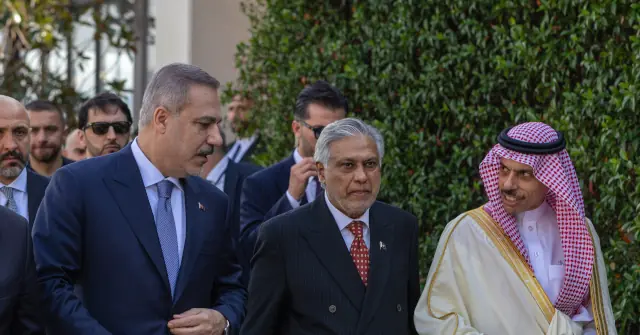
Saudi Arabia, Turkey, and Pakistan held rare, high-level talks with Iranian officials in Tehran on Monday, aiming to prevent renewed fighting with the United States and Israel amid growing concerns over another round of military strikes. The meeting, held at Tehran’s Saadabad Palace, brought together Saudi Defense Minister Prince Khalid bin Salman, Pakistani army chief Field Marshal Asim Munir, and Turkish intelligence chief Ibrahim Kalin. They met with Iranian President Masoud Pezeshkian and Mohsen Rezaei, the powerful secretary of Iran’s Supreme National Security Council.
Regional Defense Pact and Ongoing Tensions
The three visiting countries signed the Mecca Joint Defense Agreement in August, establishing a collective defense arrangement under which an attack on one member is considered an attack on all. Monday’s meeting marked their first joint high-level engagement with Iran since the Iranian-backed Houthis intensified missile and drone attacks against Saudi Arabia, targeting the kingdom’s airports and energy infrastructure.
Saudi Arabia said the mission was intended to prevent another round of military escalation and to support ongoing mediation by Qatar and Pakistan, with its Foreign Ministry calling for efforts to “de-escalate tensions between the parties to the current crisis” and pursue diplomatic solutions. The four countries concluded the meeting with an agreement to continue discussions on regional peace and security, according to a joint statement, but announced no breakthrough toward resolving the disputes threatening to reignite the war.
Strait of Hormuz and Nuclear Disputes
The talks followed a separate visit to Tehran on Sunday by Qatari mediators working in coordination with Washington as regional governments intensified efforts to prevent another round of fighting. The New York Times reported that the mediators had proposed a five-day framework involving reciprocal steps by the United States and Iran.
Under the proposal, Iran would reopen the Strait of Hormuz to commercial shipping while Washington lifted its naval blockade of Iranian ports, with mediators also pressing Tehran for an initial concession on its nuclear program. The negotiations have been complicated by disagreements over which side must act first.
The confrontation also continues over the Strait of Hormuz, where Iran’s armed forces chief claimed Monday that Tehran maintained complete control of the waterway and that vessels could transit only under Iranian regulations. The assertion contrasts with U.S. Central Command’s announcement Sunday that American forces had assisted more than 3,000 merchant vessels navigating the strait over the preceding six months.
U.S. Military Options and Regional Threats
Tehran has resisted the nuclear concessions sought by Washington, insisting that the American blockade and restrictions on Iranian oil exports be lifted before negotiations over its nuclear program can proceed. Last week, Rezaei went further, declaring that “not a single particle of enriched nuclear material” would leave Iran.
Pezeshkian welcomed efforts to strengthen regional cooperation Monday but reiterated Tehran’s insistence on pursuing nuclear activities under what it claims are its rights under the Nuclear Non-Proliferation Treaty. Iran, a U.S.-designated state sponsor of terrorism, has enriched uranium to 60 percent purity — far beyond levels required for civilian nuclear power — while the International Atomic Energy Agency has raised serious concerns over Tehran’s failure to meet its nuclear safeguards obligations.
The diplomatic push comes amid fears that renewed American or Israeli strikes could trigger another wave of Iranian retaliation against neighboring Gulf countries, several of which have already faced attacks during the conflict. Iranian officials have also threatened to target regional infrastructure, including data centers and undersea communications cables, if military operations resume.
Source: Breitbart